Disclosure: This site contains affiliate links. We may earn a commission if you make a purchase, at no extra cost to you.

>
>
>
>
>
Kochi, Japan

Kochi, Japan

Kochi Castle perched on stone ramparts surrounded by trees in Kochi Japan

Kochi, Japan Overview & Key Highlights

Kochi is the capital city of Kochi Prefecture on the southern coast of Shikoku island, facing the Pacific Ocean. The city is renowned for Kochi Castle, one of Japan's twelve surviving original tenshu (donjons) constructed prior to the Edo period. Kochi acts as the historic seat of the Tosa Domain and serves as the cultural heartland of legendary samurai Sakamoto Ryoma, offering travelers an intimate window into feudal Japanese architecture, sweeping coastal panoramas, and vibrant civic pride. Culinary culture defines Kochi's urban atmosphere, centered around the bustling Hirome Market and the historic Sunday Market that spans over one kilometer. Visitors gather across communal bench seating to sample katsuo no tataki—bonito seared over open straw flames—paired with regional craft sake. Accessible by scenic rail journeys across Shikoku, Kochi delivers an unhurried, hospitable experience characterized by historic tram networks, pine-fringed beaches at Katsurahama, and deep maritime heritage.

Kochi, Japan Travel Guide: Logistics & In-Depth Tips

Kochi sits nestled between the emerald mountain ridges of Shikoku and the deep blue swells of Tosa Bay. Unlike many Japanese prefectural capitals reconstructed after wartime devastation, Kochi retains its genuine feudal centerpiece: Kochi Castle, constructed under warlord Yamauchi Kazutoyo between 1601 and 1611. The castle is unique across Japan for preserving both its original main keep and the surrounding honmaru palace complex intact, providing an authentic spatial encounter with samurai-era governance.

The character of Kochi is intimately tied to the end of the Edo period. Local folk hero Sakamoto Ryoma, whose bronze likeness gazes resolutely out toward the Pacific at Katsurahama Beach, played a decisive role in the Meiji Restoration by negotiating the alliance that ended centuries of shogunate rule. Today, travelers will find a relaxed, warm-spirited city where vintage streetcars hum across broad avenues and open-air food culture invites travelers to converse with locals over dry sake and flame-kissed seafood.

Reasons to Visit

  • Authentic Kochi Castle: Walk inside one of Japan's 12 surviving original keeps and explore the preserved honmaru palace.
  • Hirome Market: Experience a legendary indoor market buzzing with communal tables, fresh seafood, and welcoming izakaya stalls.
  • Katsurahama Beach: Admire dramatic Pacific waves, pristine coastal pine groves, and the iconic Sakamoto Ryoma memorial statue.
  • Sunday Market (Nichiyo-ichi): Browse Japan’s longest-running outdoor market, spanning over 1.3 kilometers with 400+ vendor stalls.
  • Mount Godaisan & Chikurin-ji: Visit an ancient temple along the Shikoku 88 Temple Pilgrimage and explore the Makino Botanical Garden.

Things to Avoid

  • Do not enter the water at Katsurahama Beach; deceptive waves and severe rip currents make wading extremely hazardous.
  • Avoid relying solely on credit cards; cash is essential for streetcars, markets, and regional vendors.
  • Do not skip Hirome Market during peak evening hours out of shyness; sharing communal tables with locals is part of the hospitality tradition.
  • Avoid planning Sunday Market visits for late afternoon, as most vendors pack up and close by 3:00 PM.

Local Transportation Tips

Kochi features the Tosaden Kotsu tram network, Japan's oldest operating streetcar system, which connects Kochi Station, Kochi Castle, and surrounding neighborhoods with flat-rate fares within the city center. For outer attractions such as Katsurahama and Mount Godaisan, the dedicated MY-YU tourist bus departs directly from Kochi Station, offering discounted day passes for foreign passport holders. Taxis are clean and plentiful outside major transit points.

Travel Etiquette

  • At Hirome Market, clear your own empty cups and trash to the designated sorting stations, or hand empty plates back to the stall you bought them from.
  • Remove your shoes when entering the interior donjon of Kochi Castle; lockers or plastic bags are provided at the entrance.
  • Board streetcars from the rear door and exit from the front door, tapping your IC card or paying exact change into the fare box next to the driver upon exit.

Recommended Age Group

Kochi caters well to diverse generations, particularly travelers interested in culinary discovery, history, and tranquil coastal sightseeing.

  • Babies (0-2 years): Neutral. Historic sites involve steep stone staircases and cobblestones, making stroller navigation challenging at the castle.
  • Kids (3-12 years): Recommended. Children enjoy riding the vintage retro streetcars, visiting the beach at Katsurahama, and sampling snacks in the markets.
  • Teens (13-19 years): Recommended. Samurai history, dramatic coastal scenery, and lively casual food stalls at Hirome Market offer dynamic experiences.
  • Adults (20-64 years): Recommended. Ideal for food lovers, cultural enthusiasts, and road-trippers touring Shikoku's coast and sake breweries.
  • Seniors (65+ years): Recommended. Peaceful botanical gardens, accessible tram transport, and rich history, though interior castle climbs require caution.

Accessibility Level: Medium

  • Kochi Station and major public facilities feature barrier-free elevators, tactile paving, and accessible multi-purpose restrooms.
  • The interior keep of Kochi Castle contains steep, narrow wooden stairs without handrails and is not wheelchair accessible, though the lower grounds have paved access paths.
  • Modern low-floor trams operate on select Tosaden tram lines, though older vintage streetcars require stepping up several stairs.
  • The Makino Botanical Garden on Mount Godaisan offers excellent paved barrier-free walkways and wheelchair loan services.

Did You Know?

Kochi Castle is the only castle in all of Japan where both the original main keep (tenshu) and the palace residence (kaitokukan) survive side-by-side in their original wooden structures, having escaped both Edo-era fires and modern warfare.

Cool Statistics

  • 300+ years: The operational history of Kochi's famous Sunday Market, held continuously since 1690.
  • 12: Kochi Castle is one of only twelve remaining original feudal keeps in Japan.
  • 1.3 km: The linear length of Kochi's weekly Sunday market street, making it the longest open-air market in Japan.


Address:

Kochi, Kochi Prefecture, Japan

Find Nearby Accommodations

Basic Info

address icon

COUNTRY & Region

Japan,
Asia & Pacific, Asia

ACCESSIBILITY LEVEL​

Medium
Currency icon

LOCAL CURRENCY​

Japanese Yen (JPY)
Price level icon
Medium
Safety Level icon

SAFETY LEVEL

Duration icon

Recommended Duration

• 1-7 days
• Full day

Electricity

electricity icon

Electricity

100-110V, 
60Hz
Plug Socket icon

Plug Type

• Type A (Flat blade)
• Type B (Flat blade with grounding pin)
Plug types
Click To View Plug Types
Kochi, Japan is part of our
Culinary Heritage collection

Activities To Do In Kochi, Japan

Best Time To Visit Kochi, Japan

Kochi experiences a humid subtropical climate with mild winters and warm, humid summers characterized by high rainfall.

  • Spring (March to May): Cherry blossoms frame Kochi Castle grounds; pleasant temperatures make it ideal for walking tours.
  • Summer (June to August): Hot and humid with the vibrant Yosakoi Festival taking place in mid-August, featuring thousands of costumed dancers.
  • Autumn (September to November): Clearer skies, comfortable coastal temperatures, and prime season for fresh autumn bonito.
  • Winter (December to February): Mild and sunny along the Pacific coastline, though evenings can be brisk.

Average Temperatures Per Month

Remember to check the weather forecast a few days before the trip and before heading to the airport.

Safety Level icon

Safety Level

Kochi maintains exceptionally low crime rates and is remarkably safe for all travelers including solo female explorers at night. During late summer and early autumn, monitor weather reports for Pacific typhoons, which can disrupt local rail lines and cause rough sea swells near Katsurahama Beach where swimming is strictly prohibited.

The rating is based on multi-year peace, crime, and security indices. Before you go, always verify current conditions through official government travel advisories.

Emergency Numbers

Police: 110
Ambulance: 119

No internet needed • Includes local translations • Free for TravelingWiz readers

Spoken Languages

Japanese (Standard Japanese and local Tosa dialect)

Learn The Language

  • Konnichiwa – Hello
  • Arigatou gozaimasu – Thank you very much
  • Sumimasen – Excuse me / Sorry
  • Kore wa ikura desu ka? – How much is this?
  • Katsuo tataki o kudasai – Bonito tataki, please
  • Eigo ga hanasemasu ka? – Do you speak English?
  • Okaikei o onegaishimasu – Check, please
  • Tasukete kudasai – Please help me
Travel Booking Partner - TravelingWiz

Trip Cost & Budgeting for Kochi, Japan, 2026

Everything you need to know about money while traveling
Is Kochi, Japan expensive for tourists in 2026? No, Kochi offers surprisingly affordable travel compared to major Japanese metropolises. Based on our Human Verified prices, expect to pay around 500 yen for a cappuccino, 500 yen for a domestic beer, and 2,500 yen for a satisfying mid-range meal. Transport and hotel rates remain very reasonable. Use the data table below to calculate your specific daily budget based on your travel style.
Currency icon

LOCAL CURRENCY​:

Japanese Yen (JPY)
Price level icon
Medium
Kochi remains cash-preferred; credit cards work in major hotels, but small eateries, markets, and street trams require yen.

Per person, per day – pocket cash for small purchases.

Local: 1800
Japanese Yen (JPY)
≈ 50 USD

Full daily spend estimation (accommodation, food, transportation, attractions).

Travel Style
Japanese Yen (JPY)
≈ USD ($)
Budget
9900
47
Mid-range
18000
95
Comfort
39600
200

The Prices, Daily costs, and calculator results are estimates for planning purposes only. Actual costs may vary based on season, booking timing, personal spending habits, and currency fluctuations. TravelingWiz cannot be held responsible for discrepancies between these estimates and your final trip expenses.

  • • Dine at Hirome Market for affordable local specialties like fresh katsuo no tataki.
  • • Purchase a MY-Yu Bus pass for discounted tourist transport to Mt. Godaisan and Katsurahama Beach.
  • • Use 7-Bank ATMs inside 7-Eleven stores to withdraw cash reliably using foreign cards.
  • • Book Japanese business hotels near Kochi Station for clean, comfortable rooms at modest prices.

Pre-Order Tickets

Avoid disappointment when tickets sell out — and skip the long lines by booking online in advance. You’ll often save up to 20% too.
Save up to 20%

Travel Discounts & Coupons

Save on hotels, attractions, transport, and gear — find verified discounts for smarter travel spending.
Verified Coupons

What To Pack

  • Slip-on walking shoes for removing footwear quickly at Kochi Castle and traditional ryokan.
  • Breathable rain shell or compact umbrella, as Shikoku experiences significant precipitation, especially during early summer and typhoon season.
  • Cash wallet or coin purse, essential for food stalls at Hirome Market and the Sunday Market.
  • Hand towel or tenugui, standard for drying hands in public restrooms and traditional eateries.
  • Portable battery pack for navigation while exploring rural coastal bus loops.
We couldn't find tips for Kochi, Japan.
If you got any, please share

Recommended Itineraries for Traveling to Kochi, Japan

We couldn't find itineraries for Kochi, Japan.
you can contact us for custom trip plan

Food & Drink Highlights

Local Food Overview

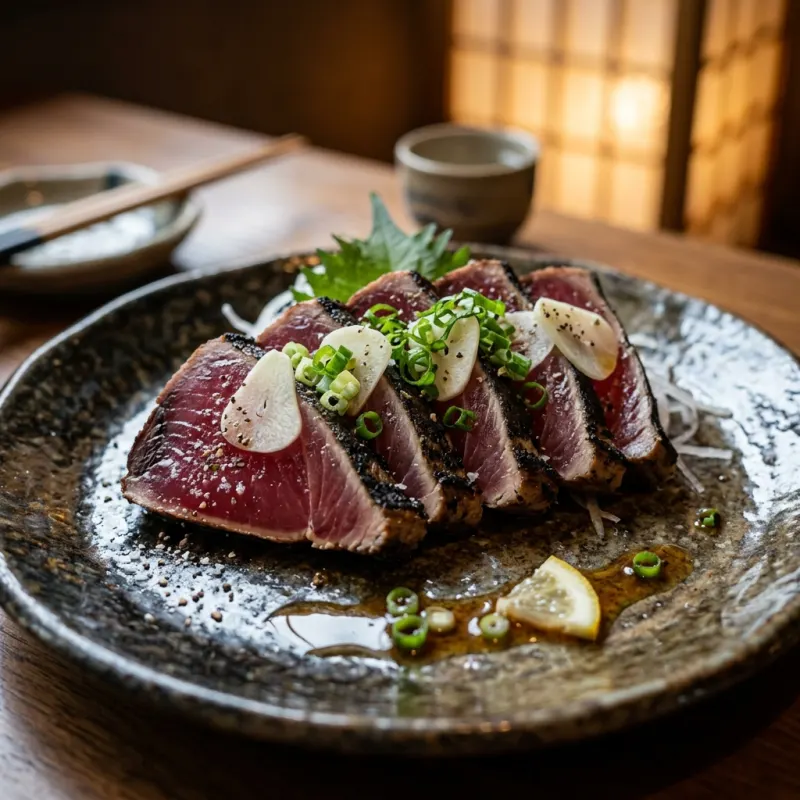
Kochi’s culinary landscape revolves around the bounty of Tosa Bay and pristine interior mountain rivers. The quintessential delicacy is Katsuo no Tataki, where thick cuts of skipjack tuna are seared over roaring rice-straw flames, sealing in smoky aromatics while keeping the interior rich and raw. The dish is traditionally served warm with sliced garlic, scallions, sea salt, or a tart ponzu sauce infused with local yuzu citrus. River delicacies such as sweet ayu fish, sawachi ryori (giant communal platters of sashimi and fried delights), and regional sake defined by a bone-dry, clean profile complete Kochi's famous communal drinking culture.
Katsuo no Tataki seared bonito slices garnished with garlic and scallions

Must Try Dish

Katsuo no Tataki - Fresh skipjack tuna lightly seared over towering rice-straw flames to impart deep smoke while maintaining a sashimi-grade center. Served warm, garnished generously with slivered garlic, local scallions, and coarse sea salt.
Food Experiences Title Icon

Food
Experiences

Discover cooking classes, tastings and local food tours

No food experience found
Maya, the human travel expert at TravelingWiz, offering curated, non-AI expertise

Maya’s Final Checklist for Kochi, Japan

Logistics shouldn’t be the focus of your trip—the experience should. I’ve hand-vetted these essential partners to ensure your arrival, stay, and exploration are as smooth as an Athenian breeze.

Where to Stay

From boutique hotels to local apartments—compare thousands of options and find the perfect stay in the best neighborhood.

Air Travel

Getting there should be seamless. Compare the best routes and prices across top airlines to start your journey on the right note.

Local Guides

Connect with experts who know the destination best. Get personalized advice and insider tips to help you plan your perfect trip.

Travel Protection

The “Engineer’s” rule: always have a backup. Secure your trip with a plan that covers every “what if” and unexpected change.

Car Rentals

Explore at your own pace with total freedom. Compare reliable rental options and find the right vehicle for your adventure.

Visa Services

Don’t let paperwork slow you down. Get expert assistance with your application to ensure all your entry documents are in order.

FAQs

Travelers can reach Kochi via the JR Dosan Line Ltd Express Nanpu train from Okayama (which connects to the Tokaido-Sanyo Shinkansen) in approximately 2.5 hours, or fly into Kochi Ryoma Airport (KCZ) via domestic flights from Tokyo or Osaka.
No, swimming is strictly prohibited at Katsurahama Beach due to dangerous undertows and swift Pacific currents, though the scenic coastal walking paths and Sakamoto Ryoma statue are major highlights.
The castle grounds feature gentle sloping paths, but the interior tenshu requires climbing extremely steep wooden ladders and removing shoes, making the upper floors inaccessible to wheelchairs.

Your Insights Matter

TravelingWiz grows through the stories of our community. If you’ve recently explored ,Kochi, Japan share your tips and stories to help us perfect our guides for the next traveler.

Related Articles

Check out our related articles and blog posts to learn even more about the destination.

No related articles found

Don’t Travel Alone

Share with your friends and family

Where should we send your offline card?

We hate spam just as much as you do

newsletter_consent *