Disclosure: This site contains affiliate links. We may earn a commission if you make a purchase, at no extra cost to you.

>
>
>
>
>
Iya Valley
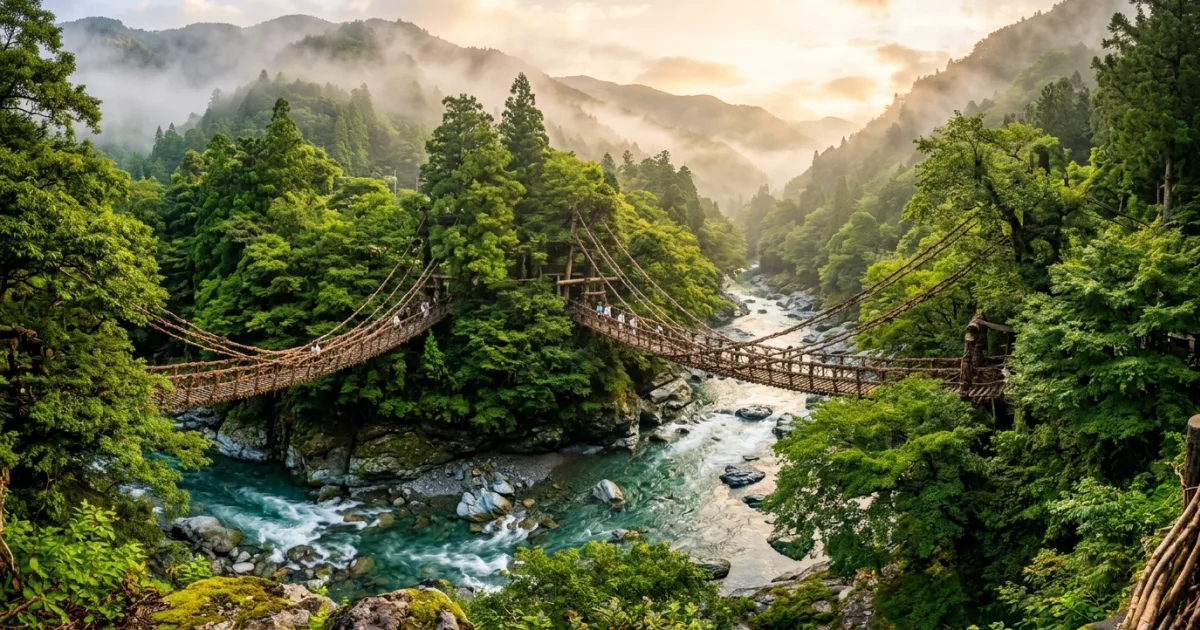
Wide angle view of the ancient Kazurabashi vine bridge spanning a misty gorge in the Iya Valley, Japan

Iya Valley Overview & Key Highlights

The Iya Valley is a dramatic mountain gorge located deep within the remote highlands of Tokushima Prefecture on Shikoku island. Renowned historically as a secluded refuge for defeated Heike clan warriors following the 12th-century Genpei War, the region features nearly vertical forested cliffs, plunging river canyons, and traditional thatched-roof farmhouses clinging to mist-shrouded slopes. Its famous vine bridges, historically woven from wild actinidia vines to allow swift destruction in case of pursuit, remain architectural testaments to medieval isolation. Today, the valley attracts travelers seeking restorative hot spring retreats, mountain hiking trails, and quiet immersion in rural Japanese heritage. Visitors explore preserved historic hamlets such as Ochiai Village, soak in riverside outdoor onsen reached by private funicular railways, and traverse scenic, single-lane mountain passes. Due to sparse public transit schedules, navigating Iya Valley is best accomplished via rental car, offering unhurried access to dramatic roadside lookouts, local soba eateries, and authentic open-hearth irori dining experiences.

Iya Valley Travel Guide: Logistics & In-Depth Tips

Carved by the raging waters of the Iya River through the center of Tokushima Prefecture, the Iya Valley stands as one of Japan's three legendary 'hidden regions' alongside Shirakawa-go and Shiiba. Divided into Nishi-Iya (West Iya), which contains the most famous tourist sites and hot spring facilities, and Oku-Iya (Deep or East Iya), an even more isolated wilderness basin, this territory has maintained an ancient rhythm of existence far removed from Japan's megacities.

Steep valley inclines feature traditional thatched-roof homes constructed on narrow terrace walls without mortar. Cultural preservation efforts, pioneered in part by author Alex Kerr at Chiiori, have restored centuries-old minka farmhouses into sustainable rural lodgings. The valley offers an unparalleled atmospheric window into Japan's deep interior, balancing untouched forested river systems with authentic folkways, mineral-rich thermal springs, and serene isolation.

Reasons to Visit

  • Walk across the iconic Kazurabashi, a 45-meter-long suspended bridge crafted from living mountain vines and timber planks.
  • Ride a private funicular cable car descending 170 meters down a sheer gorge face to reach riverside thermal baths at Hotel Iya Onsen.
  • Explore Ochiai Village, an officially recognized Historic Preservation District of traditional farmhouses perched on vertical valley terraces.
  • Cross the remote Oku-Iya Niju-Kazurabashi (Husband and Wife twin vine bridges) and pull yourself across the canyon on the historic Yaen wooden hand-pulled rope cart.
  • Experience deep tranquility and star-filled night skies unpolluted by city light in one of Japan's most preserved alpine sanctuaries.

Things to Avoid

  • Avoid attempting to rely on impromptu bus travel without memorizing return schedules, as missed afternoon connections can leave you stranded in remote mountain passes.
  • Do not drive an oversized SUV or wide luxury vehicle through the valley; single-track canyon roads require frequent reversing into tight passing cutouts.
  • Do not cross the vine bridges while wearing high heels, loose sandals, or slick shoes, as gaps between wooden deck planks can cause slips.
  • Avoid planning an itinerary without carrying physical cash, as mobile payments and card terminals are absent at most rural stops.

Local Transportation Tips

Public transportation in the Iya Valley is limited. The primary rail access point is JR Oboke Station on the JR Dosan Line. Local Shikoku Kotsu buses connect Oboke Station to West Iya attractions (such as Kazurabashi and Iya Onsen) several times daily, with reduced schedules in winter. Deep Iya (Oku-Iya) has extremely limited weekend-only service during off-peak seasons. Renting a compact car from Tokushima, Takamatsu, or Kochi remains the most practical and flexible method for exploring the region's scattered sights.

Travel Etiquette

  • When driving on narrow mountain bypasses, pull into the designated passing bays (taihijo) on your left to let oncoming vehicles pass, offering a polite nod or hand wave.
  • Observe strict hot spring rules: wash thoroughly with soap at the shower stations before entering the communal onsen water, and keep towels out of the bath.
  • Respect the privacy of local farming residents in historic hamlets like Ochiai by remaining on public roads and avoiding entering private residential grounds.
  • Take all personal trash with you; remote mountain regions have virtually no public garbage bins, and littering is strictly taboo.

Recommended Age Group

Iya Valley's steep natural topography, suspension crossings, and rustic mountain infrastructure appeal primarily to confident independent travelers and active adults.

  • Babies (0-2 years): Not Recommended. Mountain trails are unsuitable for strollers, and vine bridge gaps present serious safety concerns for infants and toddlers.
  • Kids (3-12 years): Neutral. Older children enjoy crossing the adventurous vine bridges and riding the open-air cable cars, but long winding car journeys and quiet mountain atmospheres can test younger temperaments.
  • Teens (13-19 years): Recommended. Teenagers will appreciate the outdoor adventure elements, gorge rafting on the nearby Yoshino River, and historic warrior legends.
  • Adults (20-64 years): Recommended. Ideal demographic for hiking, scenic mountain touring, culinary immersion, and peaceful hot spring ryokan retreats.
  • Seniors (65+ years): Neutral. Highly rewarding for those seeking scenic beauty and natural hot springs, but steep staircases, uneven stone steps, and swinging rope bridges require steady balance and physical mobility.

Accessibility Level: Medium

  • Wheelchair accessibility is very limited across Iya Valley due to vertical terrain, natural dirt tracks, and historic preservation regulations.
  • The vine bridges (Kazurabashi and Oku-Iya Niju Kazurabashi) are completely inaccessible for wheelchair users or mobility scooters due to flight stairs and spaced timber slats.
  • Major view points such as the Nana Magari Peeing Boy statue and Oboke Gorge boat tour docks feature steep drops, narrow walkways, and stone steps.
  • Select modern ryokan like Hotel Iya Onsen provide elevator facilities within the main lodge, but access to the lower outdoor gorge baths requires a specialized funicular car with assistance.

Did You Know?

According to legend, the vine bridges of Iya were engineered with actinidia vines rather than rigid wooden beams so that Heike warriors pursued by Genji archers could sever the vines with swords, dropping the bridge into the chasm and halting enemy advancement.

Cool Statistics

  • The Iya Kazurabashi vine bridge spans 45 meters (148 feet) in length and hangs 14 meters (46 feet) directly above the rushing river.
  • Over 5 tons of mountain vines (shirakuchikazura) are harvested and woven by local craftsmen during the mandatory triennial rebuilding process.
  • Oku-Iya's Yaen wooden transport cart is known colloquially as the 'wild monkey cart' because travelers must manually pull themselves across the ravine on overhead steel ropes.


Address:

Iya Valley, Miyoshi, Tokushima Prefecture, Japan

Find Nearby Accommodations

Basic Info

address icon

COUNTRY & Region

Japan,
Asia

ACCESSIBILITY LEVEL​

Medium
Currency icon

LOCAL CURRENCY​

Japanese Yen (JPY)
Price level icon
Medium
Safety Level icon

SAFETY LEVEL

Duration icon

Recommended Duration

• 1-7 days
• Full day

Electricity

electricity icon

Electricity

100-110V, 
60Hz
Plug Socket icon

Plug Type

• Type A (Flat blade)
• Type B (Flat blade with grounding pin)
Plug types
Click To View Plug Types
Iya Valley is part of our
Coolcation collection

Activities To Do In Iya Valley

Best Time To Visit Iya Valley

Iya Valley experiences distinct mountain seasons, with temperate conditions and dramatic landscape transformations occurring between spring and late autumn.

  • Spring (April to May): Mild temperatures ranging from 12°C to 22°C (54°F–72°F) bring blooming mountain wildflowers, lush green river gorges, and comfortable hiking conditions.
  • Summer (June to August): Humid and warm with occasional heavy rains; daytime temperatures hover between 24°C and 30°C (75°F–86°F), providing a cool mountain escape relative to coastal Japanese cities.
  • Autumn (October to November): The most popular travel season, featuring vivid crimson and gold foliage along the steep ravine walls and cool, crisp daytime highs of 10°C to 18°C (50°F–64°F).
  • Winter (December to March): Cold conditions with daytime temperatures dropping between 0°C and 8°C (32°F–46°F), intermittent snowfall, and icy mountain passes requiring snow tires or tire chains.

Average Temperatures Per Month

Remember to check the weather forecast a few days before the trip and before heading to the airport.

Safety Level icon

Safety Level

Driving safety requires vigilant attention on narrow, blind, single-lane roads with designated turnouts (taihijo) for oncoming traffic; sound your horn at curved mirrors. Vine bridges feature widely spaced wooden slats suspended high over rocky rivers, requiring careful footing and adherence to one-way crossing rules. Watch for sudden mountain weather changes and heavy fog along the crests, especially when hiking Mount Tsurugi.

The rating is based on multi-year peace, crime, and security indices. Before you go, always verify current conditions through official government travel advisories.

Emergency Numbers

Police: 110
Ambulance: 119

No internet needed • Includes local translations • Free for TravelingWiz readers

Spoken Languages

Japanese. English comprehension is limited outside primary tourist hotel receptions, though translation smartphone apps and pictorial signs are widely effective.

Learn The Language

  • Konnichiwa – Hello
  • Arigato gozaimasu – Thank you very much
  • Sumimasen – Excuse me / Pardon me
  • Kore wa ikura desu ka? – How much is this?
  • Eigo ga hanasemasu ka? – Do you speak English?
  • Onsen wa doko desu ka? – Where is the hot spring?
  • O-kaikei o onegaishimasu – The bill, please
  • Tasukete kudasai – Please help me
Travel Booking Partner - TravelingWiz

Trip Cost & Budgeting for Iya Valley, 2026

Everything you need to know about money while traveling
Is Iya Valley expensive for tourists in 2026? No, it offers moderate costs compared to major Japanese cities, making it accessible for mid-range travelers. You can expect to pay around 500 JPY for a coffee, 650 JPY for a domestic beer, and 1,800 JPY for a standard mid-range meal of local soba or river trout. Based on Human Verified prices, daily expenses stay reasonable. Use the data table below to calculate your specific daily budget based on your travel style.
Currency icon

LOCAL CURRENCY​:

Japanese Yen (JPY)
Price level icon
Medium
Cash is essential in Iya Valley, as small eateries, buses, and vine bridges rarely accept international cards.

Per person, per day – pocket cash for small purchases.

Local: 2200
Japanese Yen (JPY)
≈ 100 USD

Full daily spend estimation (accommodation, food, transportation, attractions).

Travel Style
Japanese Yen (JPY)
≈ USD ($)
Budget
12100
63
Mid-range
22000
135
Comfort
48400
298

The Prices, Daily costs, and calculator results are estimates for planning purposes only. Actual costs may vary based on season, booking timing, personal spending habits, and currency fluctuations. TravelingWiz cannot be held responsible for discrepancies between these estimates and your final trip expenses.

  • • Book a half-board ryokan stay, as evening dining options in the valley are sparse and remote.
  • • Rent a car in Takamatsu or Kochi to save significantly on expensive rural taxi fares.
  • • Purchase discounted day-use hot spring tickets at tourist centers or local inns.
  • • Savor local buckwheat soba and grilled miso skewers at roadside stalls for affordable lunches.

Pre-Order Tickets

Avoid disappointment when tickets sell out — and skip the long lines by booking online in advance. You’ll often save up to 20% too.
Save up to 20%

Travel Discounts & Coupons

Save on hotels, attractions, transport, and gear — find verified discounts for smarter travel spending.
Verified Coupons

What To Pack

  • Sturdy hiking shoes or trail runners with high-traction soles for walking on steep mountain paths and slick wooden vine bridges.
  • Layered outdoor clothing, including a waterproof windbreaker and fleece, as mountain canyon temperatures fluctuate sharply.
  • Slip-on socks and easily removable footwear for transitioning into traditional ryokan, minshuku, and temple structures.
  • Cash in Japanese Yen, as mountain vending machines, local toll roads, and rustic eateries rarely accept credit cards.
  • International Driving Permit (IDP) and navigation apps with offline capability for traversing narrow, single-lane mountain switchbacks.
  • Motion sickness remedies if you are prone to car sickness on continuous winding roads.
We couldn't find tips for Iya Valley.
If you got any, please share

Recommended Itineraries for Traveling to Iya Valley

We couldn't find itineraries for Iya Valley.
you can contact us for custom trip plan

Food & Drink Highlights

Local Food Overview

Gastronomy in Iya Valley is deeply tethered to mountain survival traditions and alpine soil cultivation. Because rice paddies were historically impossible to cultivate on the steep, rocky slopes, local agriculture evolved around buckwheat (soba), millet, and hearty root vegetables. Distinctive specialties include thick Iya soba noodles with minimal binding flour, skewered river amago (sweet mountain trout) slow-grilled over charcoal hearths, and Deko Mawashi, a skewer of hard mountain tofu, konnyaku, and baby potatoes coated in sweet yuzu miso.
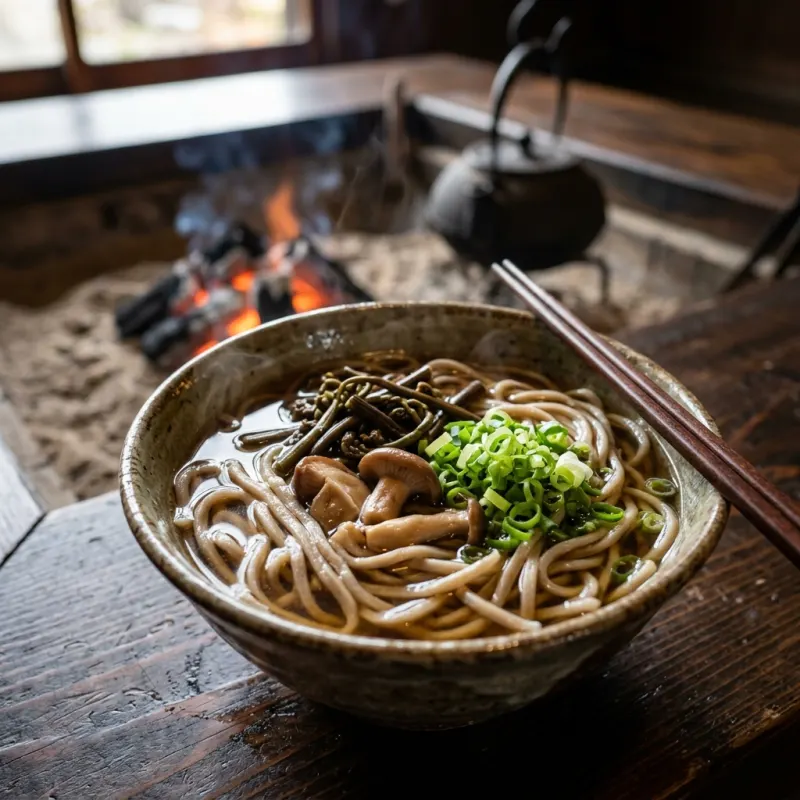
Bowl of traditional Japanese Iya soba buckwheat noodles served beside a rustic irori hearth

Must Try Dish

Iya Soba - Thick, rustic buckwheat noodles served in a fragrant dashi broth infused with local mountain mushrooms and wild mountain vegetables. Made with pure spring water and short-strand buckwheat flour, the noodles have an earthy, coarse texture distinctive to the Shikoku highlands.
Food Experiences Title Icon

Food
Experiences

Discover cooking classes, tastings and local food tours

No food experience found
Maya, the human travel expert at TravelingWiz, offering curated, non-AI expertise

Maya’s Final Checklist for Iya Valley

Logistics shouldn’t be the focus of your trip—the experience should. I’ve hand-vetted these essential partners to ensure your arrival, stay, and exploration are as smooth as an Athenian breeze.

Where to Stay

From boutique hotels to local apartments—compare thousands of options and find the perfect stay in the best neighborhood.

Air Travel

Getting there should be seamless. Compare the best routes and prices across top airlines to start your journey on the right note.

Local Guides

Connect with experts who know the destination best. Get personalized advice and insider tips to help you plan your perfect trip.

Travel Protection

The “Engineer’s” rule: always have a backup. Secure your trip with a plan that covers every “what if” and unexpected change.

Car Rentals

Explore at your own pace with total freedom. Compare reliable rental options and find the right vehicle for your adventure.

Visa Services

Don’t let paperwork slow you down. Get expert assistance with your application to ensure all your entry documents are in order.

FAQs

Take the JR Dosan Line express train to JR Oboke Station or Awa-Ikeda Station. From Oboke Station, local municipal buses run through the West Iya area and the Iya Kazurabashi vine bridge, though schedules are infrequent and require careful route planning.
Yes, the historic vine bridge is reinforced with internal steel safety cables hidden beneath the wild kiwi vines and undergoes complete structural rebuilding by master artisans every three years. However, the wooden floor planks are spaced several inches apart, revealing the rushing river below.
Driving is very common and rewarding, but routes such as Route 439 and inner valley access roads feature single-lane sections with blind mountain bends. Drivers should rent a compact car, utilize roadside passing mirrors, and drive at moderate speeds.

Your Insights Matter

TravelingWiz grows through the stories of our community. If you’ve recently explored ,Iya Valley share your tips and stories to help us perfect our guides for the next traveler.

Related Articles

Check out our related articles and blog posts to learn even more about the destination.

No related articles found

Don’t Travel Alone

Share with your friends and family

Where should we send your offline card?

We hate spam just as much as you do

newsletter_consent *