Tokushima Prefecture spans 4,146 square kilometers on the eastern side of Shikoku island, bordered by the Seto Inland Sea to the north and the Pacific Ocean to the south. Historically called Awa Province, it flourished as a major producer of indigo dye (Awa aizome) and sea salt during the Edo period. Today, Tokushima represents a compelling harmony between high-energy regional folklore and untouched rural seclusion, anchored by the prefectural capital of Tokushima City along the banks of the Shinmachi River.
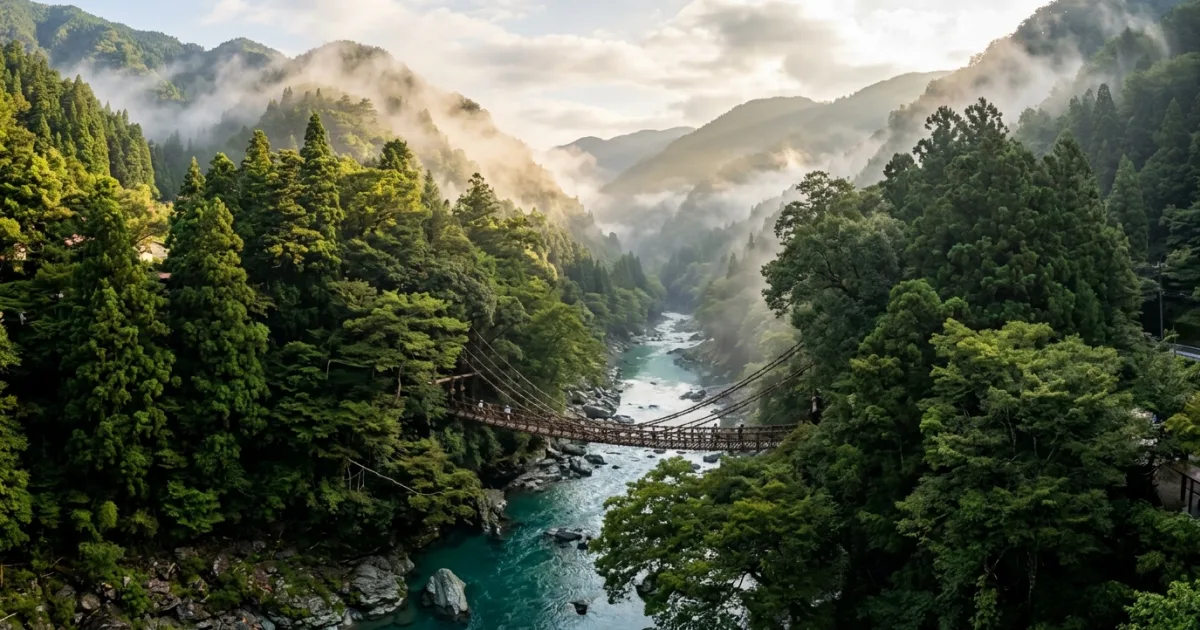
Geographically, Tokushima is partitioned by the dramatic Shikoku Mountain Range and drained by the mighty Yoshino River, known colloquially as 'Shikoku Saburo.' To the northeast lies Naruto, home to tidal whirlpools generated by massive water exchanges between the Seto Inland Sea and the Pacific. Venture southwest, and terrain rises into the misty gorge of Iya Valley, famed for its deep historical lore where defeated Heike warriors fled in the 12th century, crafting suspension bridges from wild mountain vines to prevent enemy pursuit. For travelers seeking an encounter with authentic regional traditions and rugged landscapes, Tokushima is an essential chapter of Japanese travel.
Reasons to Visit
- Naruto Whirlpools: Witness one of the world's most dynamic tidal phenomena directly from observation cruise boats or through the glass floorboards of the Uzu no Michi bridge walk.
- Iya Valley & Vine Bridges: Walk across the thrilling Iya Kazurabashi, an authentic suspension bridge woven from living actinidia vines swaying 14 meters above crystal-clear canyon water.
- Awa Odori Culture: Experience the intoxicating rhythm of Japan's most famous traditional dance festival, celebrated with spirited chanting and shamisen music.
- Shikoku 88 Temple Trailhead: Begin the legendary Shikoku henro pilgrimage at Temple 1, Ryozen-ji, soaking in centuries of Buddhist devotion and architectural tranquility.
- Otsuka Museum of Art: Marvel at more than 1,000 full-scale, flawless ceramic board reproductions of Western masterpieces, including the Sistine Chapel ceiling and Monet's Water Lilies.
Things to Avoid
- Don't rely solely on public buses in Iya: Valley buses operate on limited schedules, sometimes only once or twice a day on rural routes; plan schedules strictly or rent a car.
- Don't arrive at Naruto without checking tide tables: The whirlpools only form during tidal shifts; visiting at slack water means seeing flat, calm sea instead of swirling vortices.
- Don't cross the vine bridges carelessly: The timber slats have wide gaps between them; keep your hands free, hold the vine cables, and avoid wearing open-toed sandals or high heels.
- Don't forget to reserve festival lodging far in advance: Tokushima City hotels sell out up to 6–9 months ahead of the August Awa Odori festival week.
Local Transportation Tips
Tokushima's transport system combines regional JR train lines with extensive highway and municipal buses. The JR Kotoku Line connects Tokushima City north to Takamatsu, while the Dosan Line cuts through the dramatic Oboke Gorge in western Tokushima. For traveling to the Iya Valley, taking the train to JR Oboke Station followed by a local bus or rental car is the standard route. In Tokushima City, bicycle rentals and scenic river water buses provide convenient urban mobility, though renting a car remains the superior choice for exploring mountain passes, coastal capes, and rural temple grounds.
Travel Etiquette
- Henro Pilgrim Courtesies: When encountering white-robed henro pilgrims, offer a polite nod or greeting ('Gokurosama-desu'). Never step on a pilgrim's walking staff (Kongozue), as it symbolizes Kobo Daishi.
- Temple Etiquette: Bow slightly at the Sanmon entrance gate, wash your hands and mouth at the purification water pavilion (Temizuya), and avoid speaking loudly within temple worship halls.
- Hot Spring Protocol: Thoroughly wash and rinse your body on a stool before stepping into communal onsen baths, and ensure personal towels do not touch the bath water.
- Footwear Transitions: Always remove your shoes at the genkan entryways of ryokan, temple living quarters, and traditional cedar farmhouses.
Recommended Age Group
Tokushima Prefecture features a diverse array of outdoor and cultural attractions well-suited to varied travel demographics, though rugged mountain terrain calls for reasonable mobility.
- Babies (0-2 years): Neutral. Cobblestone temple paths, swaying vine bridges, and steep mountain gorge roads can be cumbersome with strollers; baby carriers are essential.
- Kids (3-12 years): Recommended. Children will love the thrilling glass-bottomed walk above the Naruto Whirlpools, taking river cruises, and learning dynamic dance steps at the Awa Odori Kaikan.
- Teens (13-19 years): Recommended. Ideal for active teenagers who enjoy white-water rafting on the Yoshino River, hiking across Mount Tsurugi, and crossing historic suspension bridges.
- Adults (20-64 years): Recommended. Perfect demographic for soaking in rustic Iya onsen, hiking ancient pilgrimage trails, touring indigo workshops, and exploring regional food and sake culture.
- Seniors (65+ years): Recommended. Excellent destination for peaceful temple visits, cultural art tours at the Otsuka Museum, and relaxing river ryokan stays, provided scenic driving tours replace strenuous steep ravine treks.
Accessibility Level: Medium
- Tokushima Station and JR Naruto Station feature elevators, wheelchair-accessible ticketing gates, and adapted multi-purpose restrooms.
- The Otsuka Museum of Art offers comprehensive barrier-free facilities, including spacious elevators, sloped ramps, and loaner wheelchairs.
- Uzu no Michi walkway along the Onaruto Bridge provides elevator access and flat, smooth enclosed corridors suitable for wheelchair users to view the whirlpools.
- Iya Valley attractions, including the Kazurabashi vine bridges and steep hiking ascents along Mount Tsurugi, feature uneven natural stone stairs and narrow footpaths unsuitable for wheelchairs.
Did You Know?
The Otsuka Museum of Art in Naruto houses an exact ceramic reproduction of Leonardo da Vinci's 'The Last Supper' showing both its pre-restoration deteriorated state and post-restoration condition on facing walls, allowing visitors to examine art history in unprecedented physical detail.
Cool Statistics
- The Naruto Whirlpools can reach speeds of up to 20 km/h (12 mph), ranking them among the fastest tidal currents in the world.
- Tokushima is the origin point for the Shikoku 88 Temple Pilgrimage, hosting the first 23 temples collectively known as the 'Dojo of Awakening' (Hosshin no dojo).
- Over 1.3 million spectators and dancers fill the streets of Tokushima City every August for the four-day Awa Odori celebration.
- Iya Kazurabashi vine bridge measures 45 meters in length and is rebuilt entirely from scratch every three years using fresh mountain vines and steel-reinforced cores for safety.






Buy a compatible power adapter for your trip