Samar Island occupies a singular position in Philippine geography as a vast, rugged wilderness sculpted by subterranean waters and relentless Pacific swells. Comprising the provinces of Samar, Northern Samar, and Eastern Samar, the island stretches across nearly 13,500 square kilometers of raw tropical landscape. Unlike heavily manicured beach destinations, Samar is characterized by colossal karst limestone chambers, ancient sinkholes, and untouched virgin rainforest reserves that form the Samar Island Natural Park. The island has forged an identity as an adventure sanctuary where authentic expedition tourism thrives far beyond commercial crowds.
The cultural tapestry of Samar reflects resilient Waray heritage, visible in vibrant coastal fishing settlements, centuries-old coral-stone watchtowers, and resilient communities that thrive alongside untamed natural landmarks. From the monumental marine arches of Biri carved by surging oceanic currents to the adrenaline-fueled torpedo boat runs through the Ulot River rapids, travel here demands stamina and curiosity. Samar offers an immersive encounter with pristine Philippine topography, where every expedition leads deep into uncharted subterranean cathedrals or wild Pacific shorelines.
Reasons to Visit
- Explore Langun-Gobingob Caves, the largest karst cave network in the Philippines and second-largest in Asia.
- Witness the colossal monolithic rock formations on Biri Island battered by crashing ocean waves.
- Experience extreme whitewater tubing and navigating torpedo boats down the rushing rapids of the Ulot River.
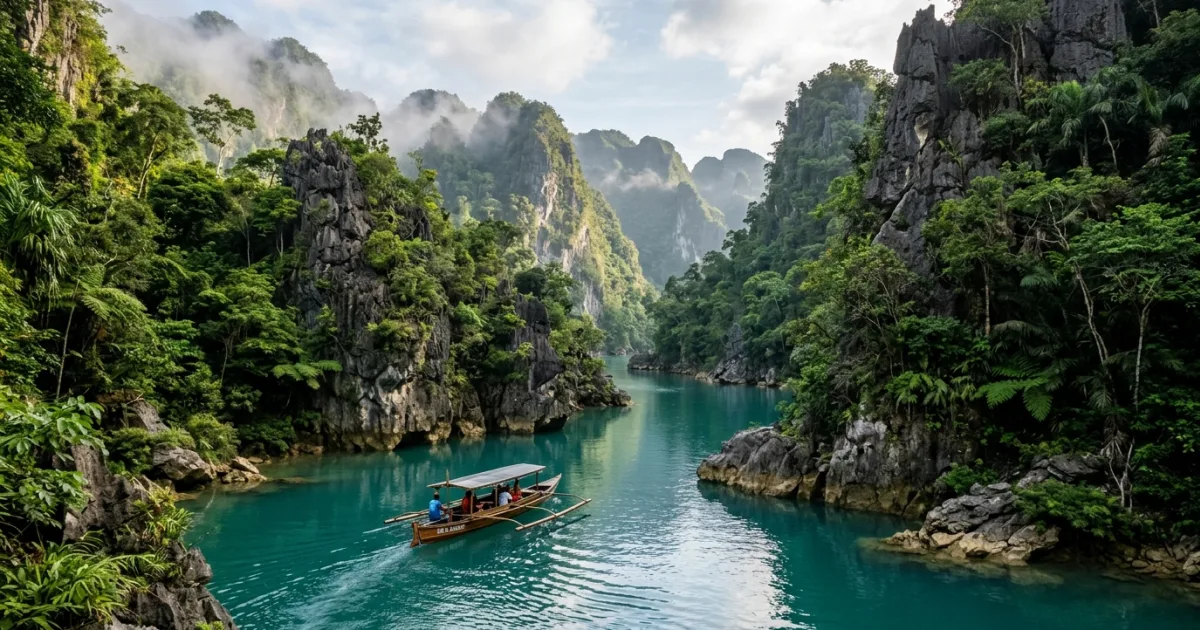
- Kayak beneath ancient limestone vaults and hanging stalactites at Sohoton Natural Bridge National Park.
- Surf world-class Pacific point breaks in Calicoan Island and Guiuan with minimal lineup competition.
Things to Avoid
- Avoid entering unmapped caves or deep karst river passages without registered municipal eco-guides and safety equipment.
- Do not rely on electronic bank cards in remote towns; ATM breakdowns and prolonged power outages can occur.
- Avoid scheduling boat excursions to Biri Island or offshore islets during small-craft gale advisories or heavy sea swells.
- Do not touch, step on, or break fragile calcite cave formations, which take millennia to develop.
Local Transportation Tips
Overland travel across Samar relies on air-conditioned passenger vans (UV Express) and provincial buses that connect main terminals in Calbayog, Catbalogan, Catarman, and Borongan. Within towns and rural districts, motorized tricycles handle short-distance transit, while specialized single motorcycles known as habal-habal traverse unpaved interior mountain roads. Island-hopping and river travel require traditional motorized outrigger bancas or specialized wooden torpedo boats designed to navigate shallow limestone rapids.
Travel Etiquette
- Greet locals with warmth and respect, as the Waray people value genuine humility and friendly openness.
- Always register at municipal tourism offices before embarking on backcountry treks or entering protected ecological zones.
- Dress modestly when entering historic Roman Catholic churches in municipal town plazas.
- Observe strict Leave No Trace principles by hauling out all synthetic waste from caves, waterfalls, and river banks.
Recommended Age Group
Samar Island is an expedition-style destination best suited for agile, self-sufficient travelers comfortable with strenuous physical activities in remote environments.
- Babies (0-2 years): Not Recommended. Rugged overland transport, limited specialized healthcare, high humidity, and boat transfers present logistical challenges.
- Kids (3-12 years): Neutral. Children can enjoy gentle river cruises in Basey or soft beaches, but technical cave treks and rough trails require caution and endurance.
- Teens (13-19 years): Recommended. Ideal for active teenagers who enjoy cliff jumping, surfing, river rafting, and adventurous underground explorations.
- Adults (20-64 years): Recommended. Perfect demographic for demanding multi-day caving, jungle trekking, coastal motorbiking, and ecotourism.
- Seniors (65+ years): Neutral. Best limited to comfortable cultural walking tours, light boat rides, and scenic drives, as cave exploration involves slippery boulders and ladder climbs.
Accessibility Level: Medium
- Primary provincial highways are fully paved and wheelchair-passable, but secondary access roads to waterfalls and caves consist of uneven dirt, rock stairs, and mud trails.
- Public utility vehicles like tricycles and habal-habal motorcycles lack accessibility ramps and adaptive mobility equipment.
- Major provincial hotels in Calbayog and Catbalogan offer ground-floor rooms and step-free lobby access, though specialized roll-in showers remain rare.
- Standard caving and river expeditions are physically demanding and generally inaccessible for travelers with severe mobility limitations.
Did You Know?
The Langun-Gobingob cave system in Calbiga encompasses an underground chamber known as 'The Football Field,' which is so expansive that it could comfortably fit three full-sized soccer stadiums inside its limestone walls.
Cool Statistics
- Third-largest island in the Philippine archipelago, spanning approximately 13,429 square kilometers.
- Home to over 100 documented caves, earning its official designation as the Caving Capital of the Philippines.
- Features the Samar Island Natural Park (SINP), covering more than 333,000 hectares of contiguous tropical forest reserve.






Buy a compatible power adapter for your trip