Disclosure: This site contains affiliate links. We may earn a commission if you make a purchase, at no extra cost to you.

>
>
>
>
>
Islas de Gigantes

Islas de Gigantes

Aerial view of Cabugao Gamay sandbar and turquoise waters in Islas de Gigantes

Islas de Gigantes Overview & Key Highlights

Islas de Gigantes is a remote chain of islands off the coast of Carles and Estancia in northeastern Iloilo, Philippines. The archipelago comprises Gigantes Norte and Gigantes Sur, along with numerous dramatic karst limestone islets, turquoise lagoons, and white-sand sandbars that emerge during low tide. Renowned throughout the region as the scallops capital of the Philippines, it offers travelers an untouched maritime atmosphere far removed from mainstream resort commercialism. Island hopping forms the core experience here, featuring landmarks such as the Tangke Saltwater Lagoon, Cabugao Gamay Island, and Antonia Beach. Visitors can explore natural caves, climb rugged rock outcroppings for sweeping vantage points, and sample extraordinarily affordable, fresh seafood directly from local fishermen. Due to its off-grid environment and developing infrastructure, the destination delivers an authentic, adventurous escape into the raw seascape of the Visayan Sea.

Islas de Gigantes Travel Guide: Logistics & In-Depth Tips

Islas de Gigantes, translating literally to 'Islands of Giants,' derives its mystical name from ancient skeletal remains discovered inside its limestone cavern networks. Situated in the northernmost reaches of Iloilo province, this archipelago remains one of Western Visayas' most visually striking natural destinations. Towering karst cliffs rise straight out of emerald waters, forming secluded saltwater pools like the renowned Tangke Lagoon, where tides dramatically alter swimming conditions throughout the day.

Beyond its dramatic topography, Gigantes retains a grounded maritime way of life. Traditional fishing communities dominate Gigantes Norte and Gigantes Sur, while adjacent uninhabited islets provide pristine stretches of sand such as the curving Bantigue Sandbar and the iconic double-sided beach of Cabugao Gamay. For eco-conscious travelers willing to trade high-end luxury for raw scenery, fresh seafood, and warm Visayan hospitality, Islas de Gigantes delivers an unforgettable remote island sanctuary.

Reasons to Visit

  • Climb the observation rock of Cabugao Gamay Island for one of the most recognizable tropical panoramas in the Philippines.
  • Swim in the enclosed, emerald waters of Tangke Saltwater Lagoon bordered by sheer karst cliffs.
  • Indulge in endless servings of freshly harvested scallops prepared in butter and garlic at bargain prices.
  • Stroll across the pristine white sandbars of Bantigue and Antonia Beach during mid-to-low tides.
  • Explore historic sites like the Spanish-era Gigantes Norte Lighthouse ruins and surrounding caverns.

Things to Avoid

  • Do not arrive at Bancal Port without physical cash, as island vendors, tricycles, and boatmen cannot process digital transactions.
  • Avoid climbing the jagged limestone outcroppings without sturdy closed-toe sandals or reef shoes to prevent cuts.
  • Do not drink unboiled or unsealed tap water on the islands; always purchase mineral water from reputable stores.
  • Avoid traveling late in the afternoon during the monsoon months when open-sea swells between Carles and Gigantes can turn hazardous.

Local Transportation Tips

On-island movement on Gigantes Norte and Gigantes Sur is conducted via habal-habal (single passenger motorcycles) or motorized tricycles along unpaved coastal tracks. Island hopping requires motorized outrigger bancas arranged either through official tour desks at Bancal Port or via local homestays. Pre-negotiate flat habal-habal fares before departure if traveling beyond standard resort transfers.

Travel Etiquette

  • Practice strict Leave No Trace principles by taking all non-biodegradable trash back to the mainland for disposal.
  • Dress modestly with cover-ups when entering local village settlements, schools, or residential lanes outside beach areas.
  • Always request permission before photographing local fishermen or drying seafood racks in coastal barangays.
  • Support community boatmen and locally owned family eateries rather than entirely relying on mainland packaged provisions.

Recommended Age Group

Islas de Gigantes is best suited for independent, active explorers capable of handling open-boat transfers and uneven karst rock footpaths.

  • Babies (0-2 years): Not Recommended. Exposed boat journeys across open waters, unpredictable chop, sharp rocks, and absence of emergency medical clinics present critical obstacles.
  • Kids (3-12 years): Neutral. Older children comfortable with swimming and motorized bangka transfers will enjoy sandbars, but sharp karst terrain demands close supervision.
  • Teens (13-19 years): Recommended. Perfect for adventurous teenagers who enjoy snorkeling, swimming in lagoons, and climbing rocky viewpoints.
  • Adults (20-64 years): Recommended. Highly rewarding for photography enthusiasts, backpackers, nature lovers, and seafood connoisseurs seeking an authentic island experience.
  • Seniors (65+ years): Neutral. Maneuvering in and out of outrigger bangkas onto wet sand or climbing slippery rocks to viewpoints requires good balance and physical agility.

Accessibility Level: Medium

  • Island-hopping boats lack wheelchair ramps, requiring passengers to wade through shallow water and step onto narrow wooden gangplanks.
  • Key attractions like the Cabugao Gamay viewpoint and Tangke Lagoon involve climbing steep, irregular wooden stairs and jagged limestone boulders.
  • Unpaved, rutted village paths on Gigantes Norte are generally unsuited for manual or electric wheelchairs.

Did You Know?

Local folklore suggests that giant humans once inhabited the island caves. The legend gained traction during the Spanish colonial era when local fishermen unearthed massive ceramic coffins inside Bakwitan Cave containing elongated human skeletons measuring over eight feet in length.

Cool Statistics

  • Comprises 10 distinct named islands and numerous smaller limestone islets.
  • Produces over 70% of the market scallops distributed across the Western Visayas region.
  • Tangke Saltwater Lagoon sits enclosed by karst cliffs exceeding 50 meters in height.

Address:

Islas de Gigantes, Carles, Iloilo, Philippines

Find Nearby Accommodations

Basic Info

address icon

COUNTRY & Region

Philippines,
Asia

ACCESSIBILITY LEVEL​

Medium
Currency icon

LOCAL CURRENCY​

Philippine Peso (PHP)
Price level icon
Low
Safety Level icon

SAFETY LEVEL

Duration icon

Recommended Duration

• 1-7 days
• Full day

Electricity

electricity icon

Electricity

220-240V, 
60Hz
Plug Socket icon

Plug Type

• Type A (Flat blade)
• Type B (Flat blade with grounding pin)
• Type C (Round pin)
Plug types
Click To View Plug Types
Islas de Gigantes is part of our
Micro Adventures collection

Activities To Do In Islas de Gigantes

Best Time To Visit Islas de Gigantes

Travel to Islas de Gigantes is dictated largely by sea conditions and seasonal monsoons in the Visayan Sea.

  • Dry Season (December to May): The premier window for smooth boat crossings, clear underwater visibility, and sun-drenched sandbars. March to May brings peak warmth and calmer waters.
  • Southwest Monsoon / Habagat (June to October): Characterized by frequent rain showers and unpredictable open-water swells that can delay or cancel motorized banca crossings from Bancal Port.
  • Shoulder Season (November): Transition period offering fewer crowds, though weather patterns require daily monitoring for sudden squalls.

Average Temperatures Per Month

Remember to check the weather forecast a few days before the trip and before heading to the airport.

Safety Level icon

Safety Level

Sea conditions represent the largest practical hazard; always wear a standard life vest on motorized bangkas and obey coast guard travel advisories during rough swells. Take caution on jagged limestone crags at Cabugao Gamay viewpoint and Tangke Lagoon, as razor-sharp edges can cause severe lacerations. Keep personal belongings sealed in dry bags against sudden splashes or rainfall.

The rating is based on multi-year peace, crime, and security indices. Before you go, always verify current conditions through official government travel advisories.

Emergency Numbers

Police: 117
Ambulance: 911

No internet needed • Includes local translations • Free for TravelingWiz readers

Spoken Languages

Hiligaynon (Ilonggo), Tagalog, English

Learn The Language

  • Maayong aga: Good morning
  • Salamat: Thank you
  • Tagpila ini?: How much is this?
  • Pila?: How much?
  • Palihog: Please
  • Oo / Indi: Yes / No
  • Diin ang…?: Where is the…?
  • Manamit!: Delicious!
Travel Booking Partner - TravelingWiz

Trip Cost & Budgeting for Islas de Gigantes, 2026

Everything you need to know about money while traveling
Is Islas de Gigantes expensive for tourists in 2026? Not at all, as this island paradise in Iloilo remains very affordable for standard travel. Expect to pay around 100 PHP for coffee, 70 PHP for a domestic beer, and 300 PHP for a meal featuring fresh local seafood. Based on Human Verified prices, visiting these pristine islands fits easily into a modest budget. Use the data table below to calculate your specific daily budget based on your travel style.
Currency icon

LOCAL CURRENCY​:

Philippine Peso (PHP)
Price level icon
Low
Cash is absolute king here because there are no ATMs on the islands and credit cards are rarely accepted.

Per person, per day – pocket cash for small purchases.

Local: 320
Philippine Peso (PHP)
≈ 5 USD

Full daily spend estimation (accommodation, food, transportation, attractions).

Travel Style
Philippine Peso (PHP)
≈ USD ($)
Budget
1760
28
Mid-range
3200
51
Comfort
7050
112

The Prices, Daily costs, and calculator results are estimates for planning purposes only. Actual costs may vary based on season, booking timing, personal spending habits, and currency fluctuations. TravelingWiz cannot be held responsible for discrepancies between these estimates and your final trip expenses.

  • • Join group island-hopping tours from Bancal Port rather than hiring private boats to split transport costs.
  • • Take advantage of all-inclusive seafood lunches during day tours, where fresh local scallops are often served unlimited.
  • • Withdraw all necessary Philippine pesos in Iloilo City or Roxas City before traveling to the Carles port.
  • • Stay at locally-managed guesthouses on Gigantes Norte for cheaper room rates compared to mainland luxury resorts.

Pre-Order Tickets

Avoid disappointment when tickets sell out — and skip the long lines by booking online in advance. You’ll often save up to 20% too.
Save up to 20%

Travel Discounts & Coupons

Save on hotels, attractions, transport, and gear — find verified discounts for smarter travel spending.
Verified Coupons

What To Pack

  • Heavy-duty dry bag for open pump boat excursions and wet landings.
  • Reef-safe sunscreen and eco-friendly toiletries to protect marine biodiversity.
  • Sturdy water shoes or aqua booties with thick grip for climbing sharp karst limestone formations.
  • High-capacity portable power bank, as island electricity can be erratic or limited to generator hours.
  • Sufficient Philippine Peso cash in small denominations, as there are no functional ATMs on the islands.
  • Snorkel mask and fins for exploring coastal coral reefs.
We couldn't find tips for Islas de Gigantes.
If you got any, please share

Recommended Itineraries for Traveling to Islas de Gigantes

We couldn't find itineraries for Islas de Gigantes.
you can contact us for custom trip plan

Food & Drink Highlights

Local Food Overview

The culinary identity of Islas de Gigantes is anchored in hyper-fresh, hyper-affordable seafood harvest. Known nationwide as the scallop capital of the Philippines, the surrounding shallow waters yield exceptional quantities of fresh bivalves served steamed, sizzling, or baked in garlic and butter. Alongside scallops, visitors dine on blue swimming crabs, freshly caught squid, sea urchins, and classic Visayan fish stews accented with lemongrass and local calamansi.
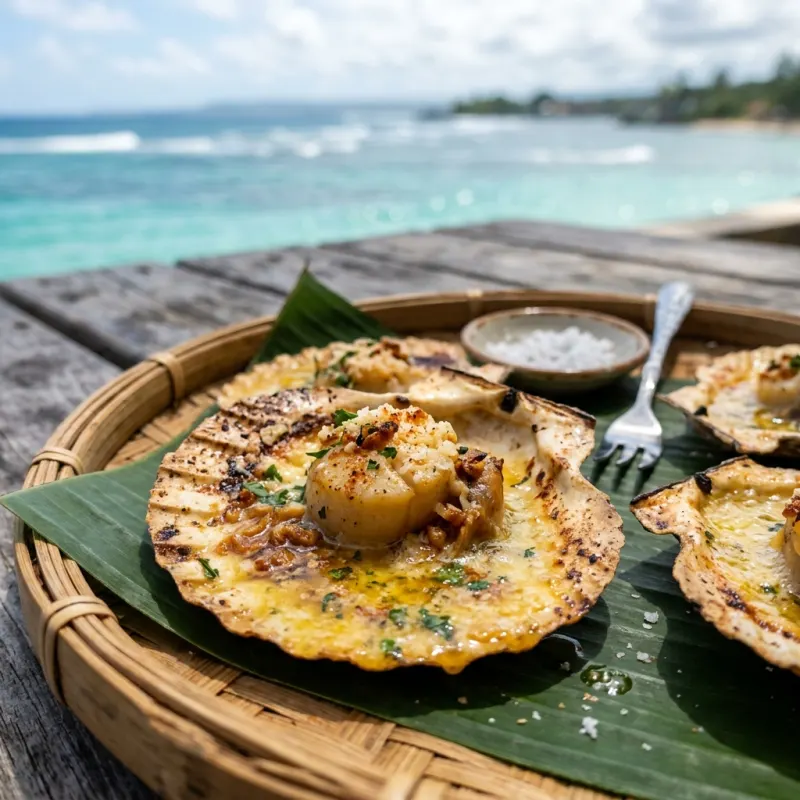
Freshly baked scallops with melted butter and garlic on a banana leaf platter

Must Try Dish

Baked Scallops with Garlic and Butter - Tender locally farmed scallops grilled in their half-shells, smothered with golden melted butter, minced garlic, and toasted cheese toppings. They are served piping hot alongside steamed rice right on the beach.
Food Experiences Title Icon

Food
Experiences

Discover cooking classes, tastings and local food tours

No food experience found
Maya, the human travel expert at TravelingWiz, offering curated, non-AI expertise

Maya’s Final Checklist for Islas de Gigantes

Logistics shouldn’t be the focus of your trip—the experience should. I’ve hand-vetted these essential partners to ensure your arrival, stay, and exploration are as smooth as an Athenian breeze.

Where to Stay

From boutique hotels to local apartments—compare thousands of options and find the perfect stay in the best neighborhood.

Air Travel

Getting there should be seamless. Compare the best routes and prices across top airlines to start your journey on the right note.

Local Guides

Connect with experts who know the destination best. Get personalized advice and insider tips to help you plan your perfect trip.

Travel Protection

The “Engineer’s” rule: always have a backup. Secure your trip with a plan that covers every “what if” and unexpected change.

Car Rentals

Explore at your own pace with total freedom. Compare reliable rental options and find the right vehicle for your adventure.

Visa Services

Don’t let paperwork slow you down. Get expert assistance with your application to ensure all your entry documents are in order.

FAQs

Travelers typically fly into Roxas City Airport (the closest commercial hub) or Iloilo International Airport, take a van or bus to Bancal Port in Carles, and board a motorized passenger boat or charter boat for the 1.5-hour crossing to the islands.
Mobile data coverage (Globe and Smart) is patchy and weak across most of Gigantes Norte and Sur, with dead zones prevalent near rocky coves and outer sandbars. Reliable Wi-Fi is virtually non-existent, making this primarily an off-grid destination.
Yes, day tours departing Bancal Port in Carles operate daily covering major spots like Cabugao Gamay, Tangke Lagoon, and Bantigue Sandbar, though spending at least one night provides a more relaxed pace.

Your Insights Matter

TravelingWiz grows through the stories of our community. If you’ve recently explored ,Islas de Gigantes share your tips and stories to help us perfect our guides for the next traveler.

Related Articles

Check out our related articles and blog posts to learn even more about the destination.

No related articles found

Don’t Travel Alone

Share with your friends and family

Where should we send your offline card?

We hate spam just as much as you do

newsletter_consent *