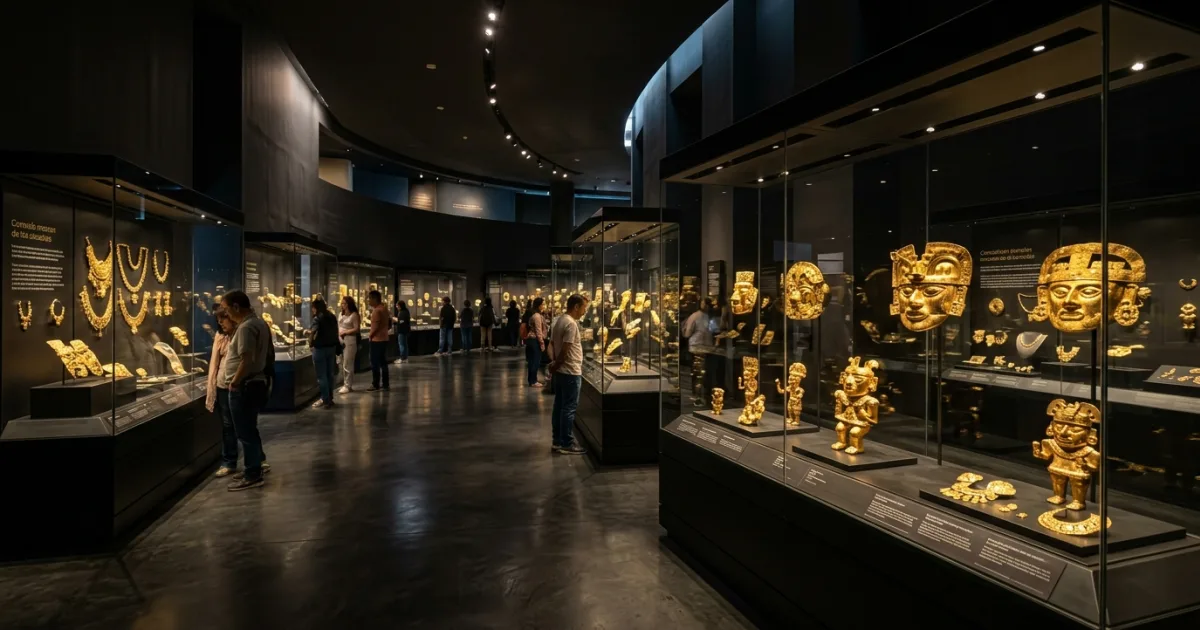
The Museo del Oro is divided into several thematic rooms spread across three floors. The journey begins with 'The Working of Metals,' which explains the sophisticated mining and metallurgical techniques developed by ancient societies. Moving forward, 'People and Gold in Pre-Hispanic Colombia' contextualizes the artifacts within the political and social structures of different regions, from the Caribbean coast to the Andean highlands.
The climax of the museum is the 'Offering Room' (Sala de Ofrendas). Here, visitors enter a circular, darkened space where a mesmerizing light and sound show simulates a shamanic ritual, illuminating thousands of gold pieces arranged in a circular display. This immersive experience connects the physical gold to its profound spiritual significance, representing the sun, life, and the divine connection between the earthly and spiritual realms.
Reasons to Visit
- Witness the legendary Muisca Raft, the artifact that directly inspired the myth of El Dorado.
- Explore the largest collection of pre-Hispanic gold in the world, featuring over 34,000 gold pieces.
- Enjoy a highly affordable, world-class museum experience with excellent bilingual curation.
- Experience the immersive Offering Room, which brings ancient shamanic rituals to life through light and sound.
Things to Avoid
- Avoid visiting on Sundays if you prefer a quiet, uncrowded experience, as entry is free and it gets very busy.
- Do not use flash photography, as it is strictly prohibited and monitored by museum staff.
- Avoid bringing large backpacks or luggage, as you will be required to leave them in the cloakroom.
- Don't plan your visit for a Monday, as the museum is closed.
Local Transportation Tips
The museum is highly accessible via Bogota's public transit system. The TransMilenio bus rapid transit system has a dedicated station named 'Museo del Oro' (Line J), which drops you off just steps from the entrance. If you are already staying in the La Candelaria neighborhood, the museum is an easy, scenic walk from most hotels and hostels. Taxis and ride-sharing apps like Uber are also widely available and offer safe, inexpensive drop-offs directly at the adjacent Santander Park.
Travel Etiquette
- Maintain a quiet and respectful demeanor, as the museum is considered a guardian of sacred indigenous heritage.
- Do not touch the glass display cases to keep them clean for other visitors.
- Follow the designated flow of traffic through the exhibits, especially in the popular Offering Room.
- When taking photos, be mindful of others and do not block the displays for extended periods.
Recommended Age Group
The Gold Museum offers a captivating experience for a wide range of ages, though its historical depth appeals most to older children and adults.
- Babies (0-2 years): Neutral. Strollers are permitted and elevators are available, but the darkened rooms and quiet atmosphere offer little engagement for infants.
- Kids (3-12 years): Recommended. The sheer volume of shiny artifacts, animal-shaped figures, and the fascinating legend of El Dorado can easily capture a child's imagination.
- Teens (13-19 years): Recommended. The visually striking exhibits and deep historical context provide excellent educational value and great photography opportunities.
- Adults (20-64 years): Recommended. Adults will deeply appreciate the sophisticated curation, historical insights, and the cultural significance of the pre-Hispanic societies.
- Seniors (65+ years): Recommended. The museum is highly accessible, featuring elevators, ramps, and plenty of seating areas throughout the galleries for resting.
Accessibility Level: Medium
- The museum is fully wheelchair accessible, with ramps at the entrance and spacious elevators connecting all floors.
- Wheelchairs are available to borrow at the cloakroom free of charge (subject to availability).
- Accessible restrooms are located on multiple floors.
- The museum offers tactile exhibits and specialized guided tours for visually impaired visitors upon prior request.
Did You Know?
The famous Muisca Raft was discovered in 1969 by three farmers in a cave near the town of Pasca. This intricate golden artifact depicts a chief standing on a raft surrounded by priests, perfectly illustrating the initiation ceremony that gave birth to the legend of El Dorado, where a new leader would cover himself in gold dust and dive into Lake Guatavita.
Cool Statistics
- The museum's collection contains over 55,000 items in total.
- There are approximately 34,000 pieces made of gold and tumbaga (a gold-copper alloy).
- The collection represents over 13 different pre-Hispanic societies.
- The museum was originally established in 1939 by the Bank of the Republic to protect Colombia's archaeological heritage.






Buy a compatible power adapter for your trip