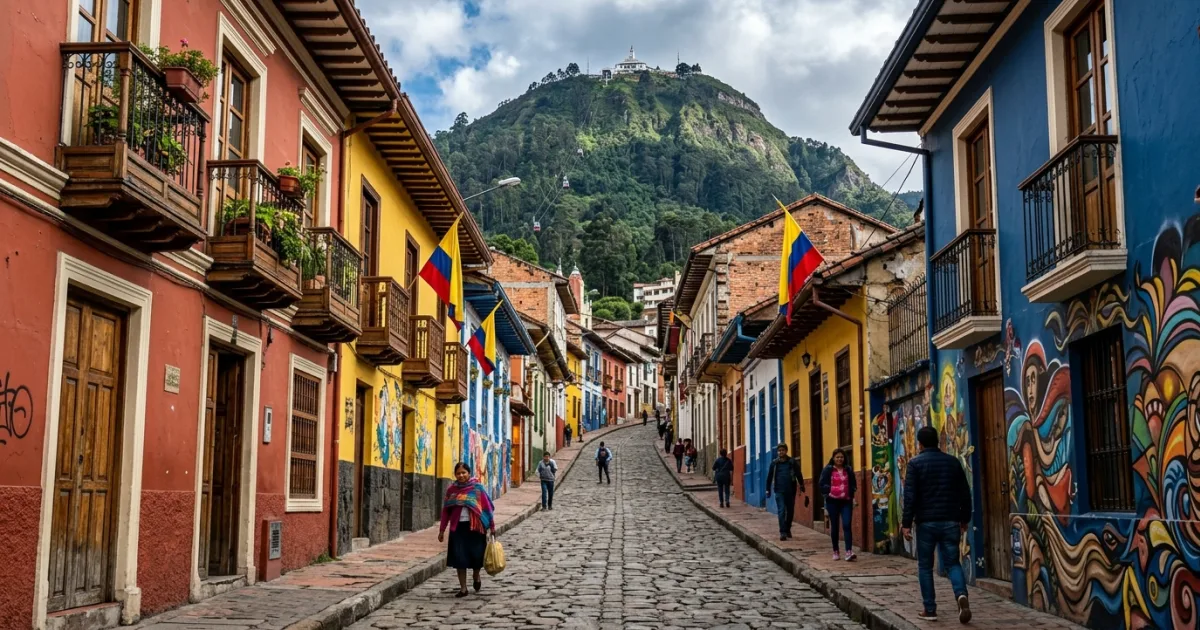
Stepping into La Candelaria is like walking through a living museum of Colombia's history. Founded in 1538, this neighborhood is where Bogota was born. Today, it is a fascinating juxtaposition of the old and the new. The narrow, steep streets are lined with colonial-era houses featuring terracotta roofs and ornate wooden balconies, many of which have been transformed into trendy cafes, boutique hostels, and independent art galleries.
Beyond its architectural charm, La Candelaria is the political and cultural nucleus of the country. The expansive Plaza de Bolivar is flanked by the imposing Palace of Justice, the National Capitol, and the Primary Cathedral of Bogota. Just a few blocks away, the neighborhood's bohemian spirit comes alive through its world-renowned street art. Massive, colorful murals decorate the walls, offering poignant social commentary and celebrating indigenous heritage, making a guided graffiti tour an absolute must for any visitor.
Reasons to Visit
- Rich History: Explore the birthplace of Bogota, featuring centuries-old architecture and historic plazas.
- World-Class Museums: Home to the famous Gold Museum and the Botero Museum.
- Vibrant Street Art: Discover some of the best urban graffiti and mural art in South America.
- Bohemian Vibe: Enjoy a lively atmosphere filled with students, artists, cozy cafes, and traditional chicha bars.
- Culinary Delights: Taste authentic Andean cuisine, including the famous Ajiaco soup.
Things to Avoid
- Walking alone at night: The streets can empty out quickly after dark, increasing the risk of muggings.
- Flashing valuables: Keep your smartphone, expensive cameras, and jewelry out of sight to avoid pickpockets.
- Hailing street taxis: Always use a trusted app like Uber or Cabify to ensure safety and fair pricing.
- Rushing on your first day: The high altitude can cause shortness of breath and fatigue; take it slow.
Local Transportation Tips
While La Candelaria itself is best explored on foot due to its narrow, cobblestone streets and concentrated attractions, getting to and from the neighborhood requires transport. The TransMilenio (Bogota's rapid transit bus system) has stations nearby, such as Las Aguas and Museo del Oro, which are efficient but can be extremely crowded and prone to pickpocketing. For tourists, ride-sharing apps like Uber, Cabify, or Didi are the safest and most convenient way to travel between La Candelaria and other parts of Bogota.
Travel Etiquette
- Greetings: Colombians are polite; always greet shopkeepers or locals with a 'Buenos días' or 'Buenas tardes' before asking a question.
- Tipping: A 10% voluntary tip (propina voluntaria) is usually added to restaurant bills. It is customary to pay it unless the service was terrible.
- Photography: Always ask for permission before taking close-up photos of locals, especially indigenous vendors.
- Dress Code: Bogota is a cosmopolitan, high-altitude city. Locals tend to dress smartly in long pants and jackets; shorts and flip-flops will immediately mark you as a tourist.
Recommended Age Group
La Candelaria offers a rich cultural experience, but its physical terrain and urban environment make it better suited for certain age groups.
- Babies (0-2 years): Neutral. The high altitude (2,640m) and uneven cobblestone streets can make navigating with a stroller difficult. Baby carriers are recommended.
- Kids (3-12 years): Neutral. While the colorful streets and Gold Museum are engaging, the heavy historical focus and extensive walking might tire younger children quickly.
- Teens (13-19 years): Recommended. The vibrant street art, lively plazas, and rich history provide an excellent educational and visually stimulating experience that appeals to older kids.
- Adults (20-64 years): Recommended. Perfect for adults interested in history, architecture, gastronomy, and urban photography, with plenty of cafes and bars to enjoy.
- Seniors (65+ years): Recommended. The concentration of world-class museums and cultural sites is highly appealing, though the high altitude and steep streets require a moderate, careful pace.
Accessibility Level: Medium
- Terrain: The neighborhood is characterized by steep hills, narrow sidewalks, and uneven cobblestones, which can be highly challenging for wheelchair users or those with mobility issues.
- Museums: Major attractions like the Museo del Oro and Museo Botero are fully wheelchair accessible with ramps and elevators.
- Transport: Accessible taxis can be arranged, but navigating the immediate streets of La Candelaria often requires assistance.
Did You Know?
Did you know that La Candelaria is home to a traditional fermented corn beverage called Chicha? Once banned by the government in the mid-20th century due to lobbying by beer companies, Chicha has made a massive cultural comeback. Today, you can find it served in traditional totumo bowls in the narrow alleyway known as the Chorro de Quevedo, the exact spot where Bogota is said to have been founded.
Cool Statistics
- Elevation: 2,640 meters (8,660 feet) above sea level.
- Founding Year: 1538, making it one of the oldest neighborhoods in the Americas.
- Gold Artifacts: The nearby Museo del Oro houses over 55,000 pieces of gold and other materials from pre-Hispanic cultures.
- Plaza Size: Plaza de Bolivar covers nearly 14,000 square meters in the heart of the district.







Buy a compatible power adapter for your trip