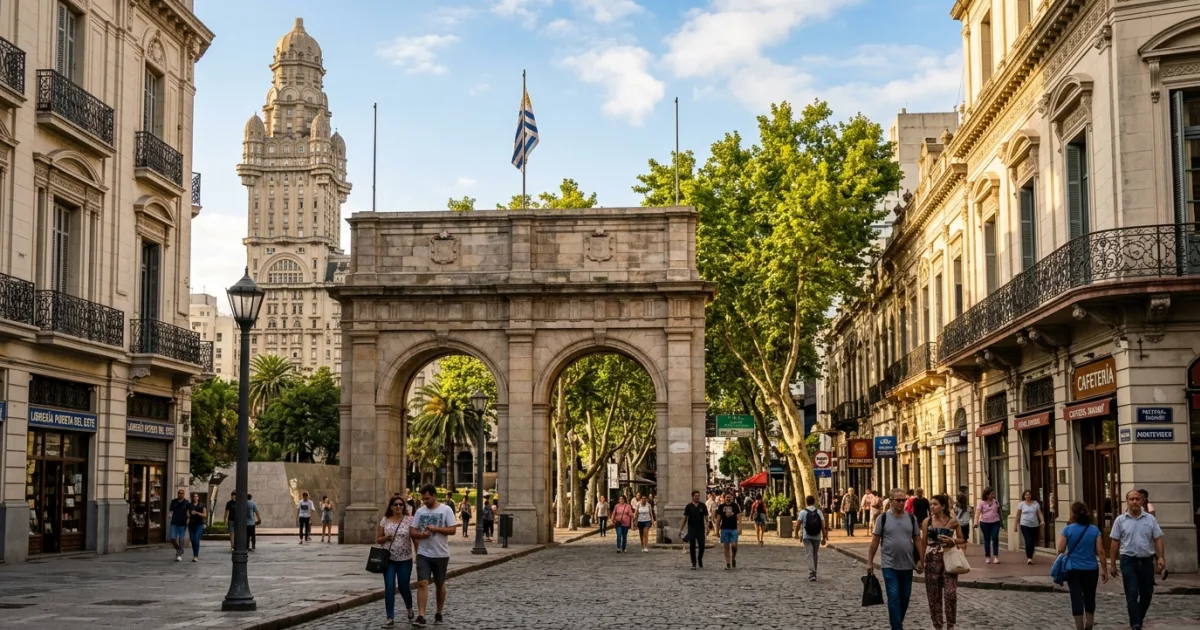
Ciudad Vieja sits as the historic soul of Montevideo, preserving centuries of naval, political, and architectural development. Established during the Spanish colonial era as a fortified bastion guarding the Río de la Plata estuary, its walls were dismantled in the 19th century, leaving behind landmark fragments like the Puerta de la Ciudadela. Today, the district serves as an intriguing intersection of old-world charm, contemporary cultural spaces, and everyday municipal government operations.
Strolling through the neighborhood brings travelers face to face with an eclectic array of architectural designs, from neo-classical government buildings like the Cabildo to ornate Art Nouveau and Art Deco residences. Pedestrian streets such as Sarandí and Pérez Castellano are lined with second-hand bookstalls, mate gourd crafters, and historic cafe counters. The waterfront edge provides access to the port, where maritime history and working-class canteen culture merge seamlessly.
Reasons to Visit
- Architectural diversity showcasing preserved Spanish colonial, neoclassical, and Art Deco landmarks within walking distance.
- Mercado del Puerto's authentic culinary theater of open-fire grilling and local Tannat wine tasting.
- Rich cultural institutions, including free municipal museums, art galleries, and the prestigious Solís Theatre.
- Vibrant street culture filled with independent craft stalls, antique markets, and weekend candombe drumming circles.
Things to Avoid
- Do not walk through poorly lit port-adjacent side streets alone late at night.
- Avoid paying with physical cash at full-service restaurants if you possess a foreign credit card, as you will miss the statutory tourist VAT refund.
- Do not display expensive cameras or jewelry loosely in crowded open markets.
- Avoid visiting late on Sunday afternoons, as many local businesses and independent shops close down.
Local Transportation Tips
Ciudad Vieja is exclusively pedestrian-friendly, with major attractions situated within an easily walkable 1.5-kilometer radius. City buses terminate regularly at Plaza Independencia, connecting the historic quarter directly to Pocitos, Punta Carretas, and Tres Cruces Bus Terminal. Metered radio taxis and Uber operate reliably across the district.
Travel Etiquette
- Mate sharing is a revered social ritual; never stir the bombilla (metal straw) if offered a sip from a gourd.
- Greet store owners and restaurant staff with a polite 'Hola' or 'Buenas tardes' before asking questions.
- Tipping 10% on dining bills is customary and appreciated in restaurants and bars.
Recommended Age Group
Ciudad Vieja provides diverse architectural, culinary, and historical attractions suitable for various travel demographics.
- Babies (0-2 years): Neutral. Cobblestone surfaces and narrow sidewalks can make navigating standard strollers somewhat bumpy.
- Kids (3-12 years): Neutral. While vibrant street performers and the port provide visual appeal, historical walking tours may require added interactive engagement for young children.
- Teens (13-19 years): Recommended. Street art, photography corridors, vintage clothing boutiques, and bustling cafes provide engaging exploration.
- Adults (20-64 years): Recommended. Ideal demographic for museum visits, architectural walking, fine dining at parrillas, and neighborhood nightlife.
- Seniors (65+ years): Recommended. Compact, flat walking routes and rich cultural stops make it an accessible and leisurely neighborhood to tour.
Accessibility Level: Medium
- Pedestrian corridors along Peatonal Sarandí offer level walking, though nearby side streets feature irregular cobblestones and raised curbs.
- Major museums such as the Cabildo de Montevideo and Solís Theatre offer ramp access and accessible restrooms.
- Standard public city buses have limited accessibility, making app-based rideshare vehicles the best transit option for mobility-impaired visitors.
Did You Know?
The Puerta de la Ciudadela stands as one of the few surviving sections of the massive stone fortress wall that once isolated the entire peninsula from inland South America until 1829.
Cool Statistics
- Original citadel fortress wall thickness: 6 meters (20 feet) of solid granite masonry.
- Mercado del Puerto iron framework structure fabricated in Liverpool, England, in 1868.
- Over 15 distinct museums and public cultural centers packed inside 1 square kilometer.




Buy a compatible power adapter for your trip