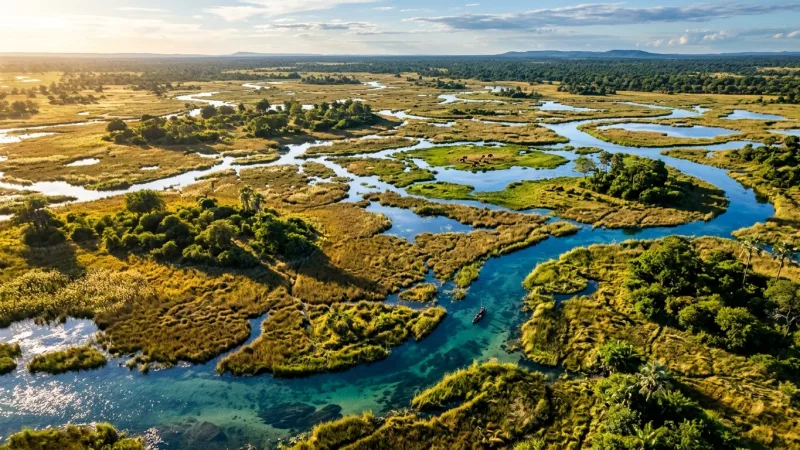
One of the most counterintuitive natural phenomena in the region is that the seasonal flood does not coincide with local rainfall. The rains fall hundreds of miles to the north in the Angolan highlands during the wet summer months (December to February). This massive surge of water takes months to slowly filter across the sands of the Kalahari Basin, arriving at the delta during the bone-dry winter months from June to August.
If your priority is water-based safaris—such as poling silently along narrow reed channels in a traditional mokoro dugout canoe or tracking animals on boat cruises—schedule your trip during the dry winter peak flood. Conversely, visiting during the local rainy summer (January to March) brings dramatic skies, excellent bird migrations, and newborn animals, but many iconic water channels will be completely dry.