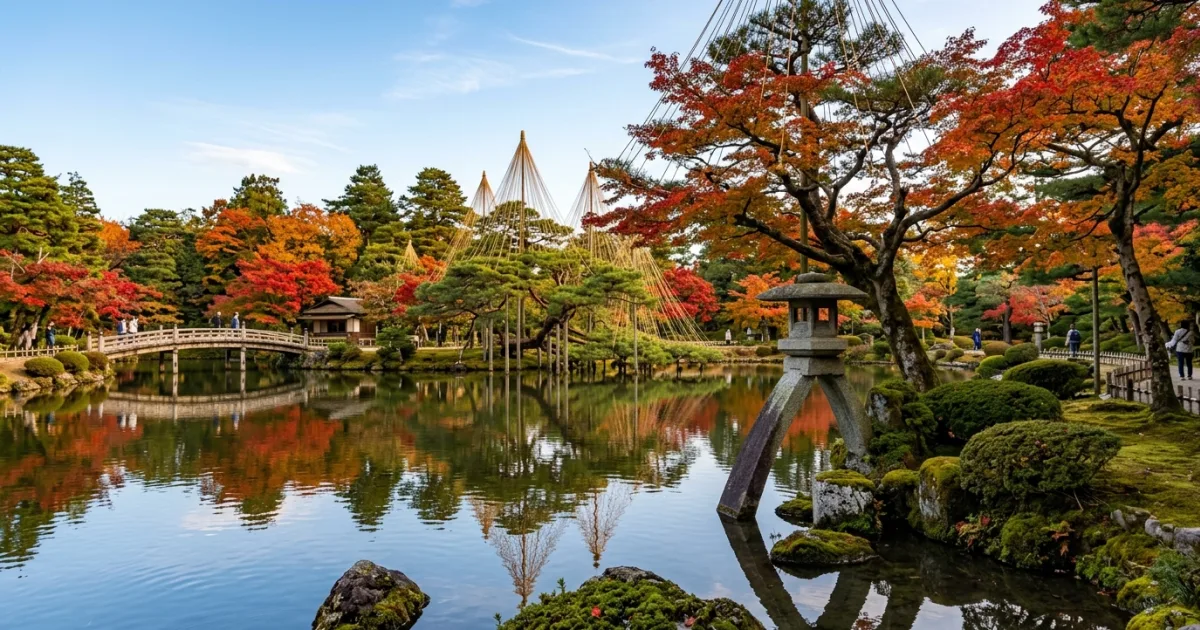
Kanazawa stands as the cultural centerpiece of the Hokuriku region, having flourished during the Edo period under the Maeda clan of the Kaga Domain, the wealthiest daimyo family outside the Tokugawa shogunate. Because the city remained untouched by wartime bombing, its historic architecture survives intact. Preserved timber machiya townhouses line flagstone avenues in Higashi Chaya, Kazuemachi, and Nishi Chaya, where geisha entertainment traditions continue in exclusive tea houses. Kenroku-en Garden, developed over nearly two centuries, showcases masterfully sculpted black pines, reflective ponds, and winding streams.
Alongside historical landmarks, Kanazawa has cultivated a reputation as an epicenter of modern design. The circular, glass-walled 21st Century Museum of Contemporary Art houses iconic international installations, including Leandro Erlich's 'The Swimming Pool'. Artisans continue centuries-old traditions of Kaga Yuzen silk dyeing, Kutani porcelain, and kanpaku gold leaf hammering, allowing travelers to participate in workshops or browse historic ateliers. Omicho Market, operating since 1721, acts as the city's kitchen, supplying locals and visitors with pristine sea urchin, sweet shrimp, and seasonal catches.
Reasons to Visit
- Kenroku-en Garden: Experience one of Japan's three most acclaimed classical landscape gardens, famous for seasonal flora and historic stone lanterns.
- Intact Geisha Districts: Stroll through Higashi Chaya and Kazuemachi to admire Edo-period wooden lattice facades and preserved teahouse architecture.
- Nagamachi Samurai District: Walk between earthen walls and tiled gateways where high-ranking samurai families once resided.
- Omicho Market: Savor fresh seafood bowls, grilled skewers, and local Kaga vegetables across more than 170 active market stalls.
- 21st Century Museum of Contemporary Art: Explore avant-garde exhibitions within an architecturally acclaimed transparent circular pavilion designed by SANAA.
- Gold Leaf Craftsmanship: Witness gold beaten to a thickness of 1/10,000th of a millimeter and sample gold-leaf soft serve ice cream.
Things to Avoid
- Do not peek into private residences or photograph geishas without permission in the Chaya districts, respecting posted neighborhood etiquette signs.
- Avoid visiting Kenroku-en strictly during midday hours between 11:00 AM and 2:00 PM when tour groups peak; morning visits offer serene views and softer light.
- Do not rely entirely on cashless payment methods at small stalls inside Omicho Market or local artisanal shops.
- Do not walk while eating in historic neighborhoods; consume snacks at the designated stall areas to prevent littering.
Local Transportation Tips
Kanazawa is compact and exceptionally navigable on foot or via public transit. The Kanazawa Loop Bus departs from Kanazawa Station's East Gate every 15 minutes, operating in both clockwise and counter-clockwise loops that stop at all major attractions including Kenroku-en, Omicho Market, and Higashi Chaya. A 1-Day Pass offers tremendous value for tourists. For flexible exploration, the city operates the Machi-Nori public bike-share system, with docking hubs distributed widely across central districts.
Travel Etiquette
- Remove your shoes promptly at entryways marked by genkan steps before stepping into historic teahouses, temples, or traditional inns.
- Keep voices low in residential samurai and geisha neighborhoods, especially during evening hours.
- Carry trash with you until you find a designated disposal bin, as public trash receptacles are rare on city streets.
- Avoid tipping at restaurants, bars, and hotels; exceptional service is included as part of standard Japanese hospitality (omotenashi).
Recommended Age Group
Kanazawa offers cultural immersion and relaxed pacing suitable across various age demographics.
- Babies (0-2 years): Neutral. Cobblestone paths and narrow staircases inside historic wooden castles make stroller use difficult, though modern museums and train stations have clean nursing facilities.
- Kids (3-12 years): Recommended. Interactive gold leaf workshops, castle ramparts, and open garden lawns offer engaging sensory activities for children.
- Teens (13-19 years): Recommended. The contemporary art installations, unique local street foods, and ninja-associated architecture at Myoryu-ji appeal strongly to adolescent travelers.
- Adults (20-64 years): Recommended. Ideal for cultural heritage, regional gastronomy, craft cocktail bars, and relaxed walking tours.
- Seniors (65+ years): Recommended. Compact city dimensions, efficient loop bus transport, and peaceful garden walks provide an unhurried, comfortable travel environment.
Accessibility Level: Medium
- Kanazawa Station features fully barrier-free access, tactile paving, accessible restrooms, and multiple elevators connecting train platforms to the concourse.
- Kenroku-en Garden offers a designated wheelchair-accessible route that avoids steep gravel paths and stone bridges, available on informational park maps.
- The 21st Century Museum of Contemporary Art is completely flat, single-story, and fully accessible for wheelchairs and strollers.
- Historic residences in Nagamachi and tea houses in Higashi Chaya contain high wooden door thresholds and steep wooden stairs that present barriers for mobility-impaired visitors.
Did You Know?
Kanazawa produces over 99% of Japan's gold leaf and 100% of its silver leaf, utilizing precise pounding techniques passed down through generations that flatten gold alloy into sheets thinner than a single strand of human hair.
Cool Statistics
- Kenroku-en encompasses approximately 28 acres and features over 8,700 trees and 180 plant species.
- Kanazawa Castle was originally constructed in 1583 by Maeda Toshiie and rebuilt using traditional mortise-and-tenon wood joinery without nails.
- Omicho Market has been continuously operating in central Kanazawa since 1721, hosting around 170 individual merchant stalls.






Buy a compatible power adapter for your trip