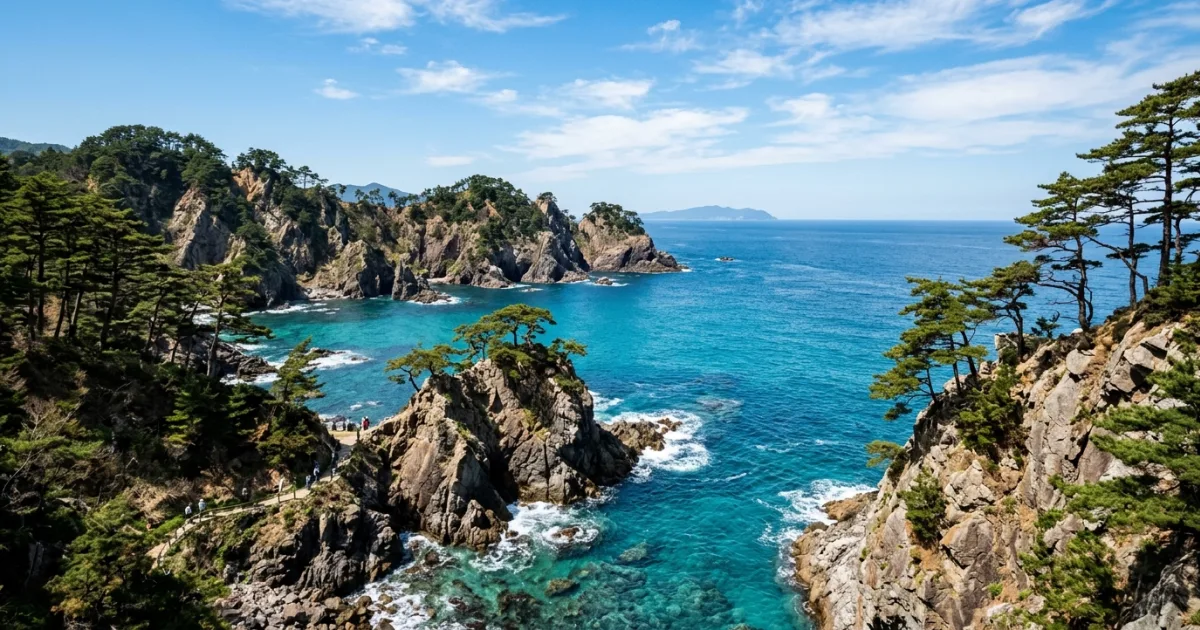
Sado Island is the largest island in the Sea of Japan outside the main Japanese archipelago, spanning over 855 square kilometers of untamed coastline, fertile agricultural valleys, and steep forested ranges. Historically functioning as a remote exile outpost for political elites, emperors, and classical dramatists, the island cultivated an extraordinarily sophisticated arts culture that flourished parallel to its working fishing and agricultural communities.
Today, Sado Island offers a tranquil escape from urban congestion. It invites travelers to marvel at early industrial engineering at the Sado Gold Mine, watch wild crested ibis soar over organic rice paddies, witness Noh theater on historic rural stages, and navigate crystalline sea grottos in historic wooden wash-tub boats.
Reasons to Visit
- Explore the monumental tunnels and open-cut cliffs of the Sado Gold Mine, a masterwork of Edo-period extraction.
- Ride the iconic traditional round tub boats (tarai-bune) across clear turquoise inlets.
- Encounter the rescued Toki (Japanese crested ibis) thriving in conserved wetlands and breeding centers.
- Wander the labyrinthine wooden alleyways of Shukunegi, a preserved Edo-period coastal shipbuilders' village.
- Experience world-class performing arts, from traditional Noh plays to modern Kodo taiko drum performances.
Things to Avoid
- Avoid relying solely on public buses without checking schedules in advance, as departures are sparse in rural sectors.
- Do not ignore marine weather advisories, particularly during late autumn and winter when Sea of Japan winds can ground ferries.
- Avoid planning an ambitious island itinerary without a vehicle; distances between northern cliffs and southern bays require several hours of transit.
- Do not expect widespread English signage or foreign card readers in remote fishing hamlets.
Local Transportation Tips
Renting a car at Ryotsu Port or Ogi Port is the most practical method for touring Sado Island efficiently. Alternatively, the Niigata Kotsu Sado bus company runs scheduled island routes connecting major hubs, with 1-day and 2-day unlimited transit passes available at the Ryotsu Ferry Terminal. Sightseeing taxis and organized coach tours also operate out of the main ports during peak seasonal windows.
Travel Etiquette
- Always remove shoes when stepping onto tatami mats in ryokan, temples, or historic residences.
- Observe designated viewing distances and keep noise minimal when birdwatching near toki nesting zones.
- Separate and carry personal trash, as public waste bins are scarce across outdoor rural reserves.
- Refrain from swimming or launching watercraft in working commercial fishing harbors.
Recommended Age Group
Sado Island accommodates a variety of travel demographics, best suited to those who appreciate unhurried natural pacing and immersive cultural exploration.
- Babies (0-2 years): Neutral. Long ferry transits and rugged terrain around historic mines and cliffs can make stroller transport challenging.
- Kids (3-12 years): Recommended. Children enjoy interactive gold panning activities at the Nishimikawa Gold Park and novel tub-boat rides in shallow coves.
- Teens (13-19 years): Recommended. Outdoor coastal kayaking, cycling along scenic sea routes, and exploring historic subterranean mine tunnels engage active teenagers.
- Adults (20-64 years): Recommended. Ideal for cultural travelers, road-trippers, culinary enthusiasts, and nature photographers looking for pristine coastal vistas.
- Seniors (65+ years): Recommended. Outstanding for relaxed ryokan hospitality, historic temple walks, and scenic bus tours, provided travelers mind uneven historic cobblestones.
Accessibility Level: Medium
- Ryotsu Port Ferry Terminal features barrier-free boarding bridges, elevators, and accessible restroom facilities.
- Modern car ferries offer wheelchair-accessible cabins and elevator access between vehicle decks and passenger seating.
- Certain sections of the Sado Gold Mine (Sodayu tunnel) have smooth paved paths with ramp access, though historical tunnels feature stairs and moist, uneven flooring.
- Historic preservation districts like Shukunegi retain narrow, unpaved flagstone pathways with steps that present obstacles for manual wheelchairs.
Did You Know?
Sado Island was once the destination for prominent historical exiles, including Emperor Juntoku, Buddhist monk Nichiren, and Zeami Motokiyo—the master who codified classical Noh theater. This aristocratic heritage explains why more than 30 traditional Noh stages still exist across rural Sado farms and shrines today.
Cool Statistics
- 400: Approximate number of continuous years the Sado Gold Mine operated between 1601 and 1989.
- 30+: Preserved rural Noh drama stages still standing across the island's village shrines.
- 855: Total land area in square kilometers, making Sado Japan's sixth-largest island.
- 400+: Wild crested ibis (toki) currently repopulating Sado's skies after facing near extinction.






Buy a compatible power adapter for your trip