

Low – budget‑friendly basics
Medium – moderate mid‑range costs
High – pricey lodging, dining & transport
Disclosure: This site contains affiliate links. We may earn a commission if you make a purchase, at no extra cost to you.
Low – budget‑friendly basics
Medium – moderate mid‑range costs
High – pricey lodging, dining & transport
5 shields = Excellent – very low crime or conflict.
4 shields = Safe – low risk, routine care.
3 shields = Relatively safe – use normal street smarts.
2 shields = Use caution – higher crime or periodic unrest.
1 shields = Avoid – active conflict or extreme danger.
Scores are derived from multi-year peace, homicide and security indices blended into a single 1-to-5 scale.
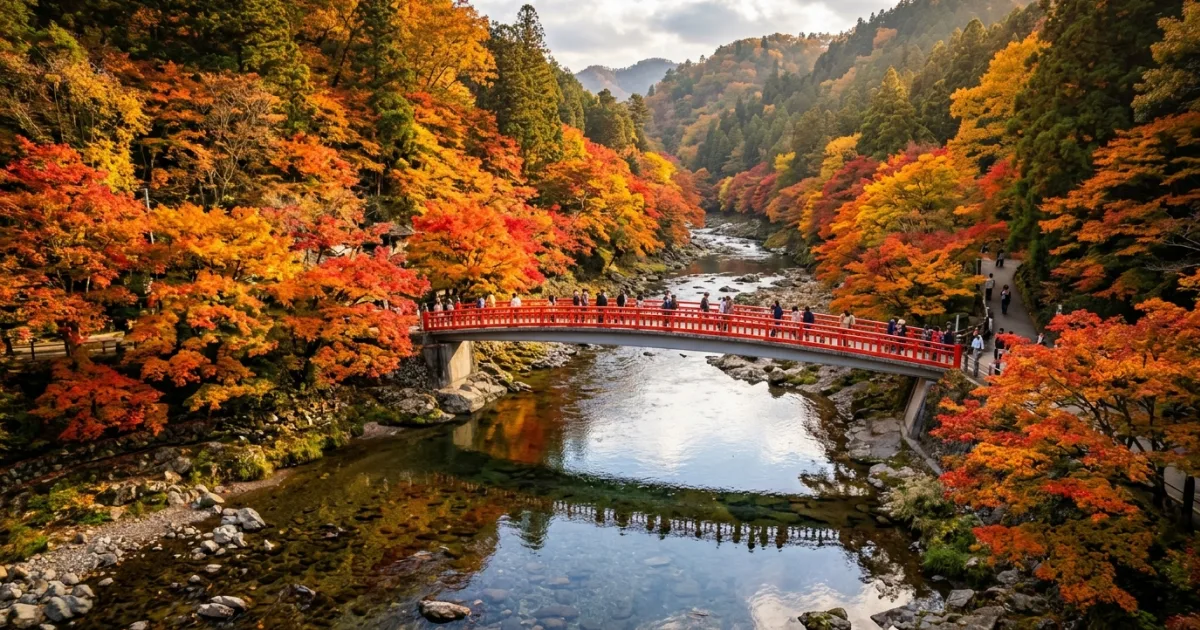
Toyota City occupies the north-central expanse of Aichi Prefecture, functioning globally as the epicenter of Japan's automotive manufacturing while safeguarding some of central Honshu's most pristine river valleys. Best known worldwide as the global headquarters of Toyota Motor Corporation, the metropolis spans a striking dual identity. Its urban core features high-tech showcases like the Toyota Kaikan Museum and the sleek Toyota Municipal Museum of Art, contrasted against the sweeping architectural curves of Kisho Kurokawa's Toyota Stadium. Beyond its industrial vitality, the city encompasses vast forested highlands and preserved riverine hamlets. The Asuke district preserves an Edo-period merchant post along the Ina Kaido salt route, framed by the dramatic maple-covered cliffs of the Korankei Gorge. In the adjacent Obara region, thousands of rare shikizakura trees flower simultaneously in autumn alongside vibrant red maple leaves, creating one of Japan's most singular botanical spectacles. Whether you are examining automated production robotics or strolling lantern-lit riverside trails, Toyota City delivers an unexpectedly multifaceted Japanese itinerary.
Toyota City is the largest municipality by area in Aichi Prefecture, offering a dynamic contrast between modern technological supremacy and deep rural tranquility. Known historically as Koromo, the town renamed itself in 1959 to honor Toyota Motor Corporation, which established its global roots here. The urban core displays world-class industrial ingenuity through interactive showcases, cutting-edge automotive prototyping facilities, and architectural landmarks like the Yoshio Taniguchi-designed Toyota Municipal Museum of Art.
Venture beyond the central industrial grid, however, and the city reveals verdant mountain landscapes that account for nearly seventy percent of its territory. The Asuke township along the Tomoe River preserves rows of plaster-walled Edo and Meiji merchant stores, while the ancient Korankei valley boasts over 4,000 maple trees planted by Buddhist monks since the seventeenth century. Together with Obara's miraculous autumn-blooming cherry trees and tranquil mountain hot springs, Toyota City forms an essential, multi-layered gateway into the industrial and cultural soul of central Japan.
Transit around the central core of Toyota City is serviced by the Meitetsu Toyota and Mikawa rail lines connecting into the Nagoya metropolitan transit network via Toyotashi and Shin-Toyota stations. To explore regional attractions including Korankei, Sanshu Asuke Yashiki, and the Obara district, travelers utilize the extensive municipal 'Oiden' bus network. For full flexibility across rural valleys, car rentals from Toyotashi Station are highly recommended.
Toyota City provides diverse educational and recreational opportunities tailored across all life stages, pairing tech discovery with gentle nature walking.
Toyota City was originally an ancient silk-weaving and lumber hub named Koromo. The city officially altered its legal name to Toyota in January 1959 to honor the manufacturing empire founded by Kiichiro Toyoda, making it one of the world's most famous company-named municipalities.

Toyota City experiences distinct four-season weather, with mountainous interior regions running slightly cooler than the central urban basin.
| Month | °C | °F |
|---|---|---|
| Jan | 4 | 39 |
| Feb | 6 | 43 |
| Mar | 10 | 50 |
| Apr | 14 | 57 |
| May | 18 | 64 |
| Jun | 22 | 72 |
| Jul | 26 | 79 |
| Aug | 27 | 81 |
| Sep | 24 | 75 |
| Oct | 18 | 64 |
| Nov | 13 | 55 |
| Dec | 6 | 43 |
Remember to check the weather forecast a few days before the trip and before heading to the airport.
5 shields = Excellent – very low crime or conflict.
4 shields = Safe – low risk, routine care.
3 shields = Relatively safe – use normal street smarts.
2 shields = Use caution – higher crime or periodic unrest.
1 shields = Avoid – active conflict or extreme danger.
Scores are derived from multi-year peace, homicide and security indices blended into a single 1-to-5 scale.
The rating is based on multi-year peace, crime, and security indices. Before you go, always verify current conditions through official government travel advisories.
No internet needed • Includes local translations • Free for TravelingWiz readers

Low – budget‑friendly basics
Medium – moderate mid‑range costs
High – pricey lodging, dining & transport
Per person, per day – pocket cash for small purchases.
Full daily spend estimation (accommodation, food, transportation, attractions).
Travel Style | Japanese Yen (JPY) | ≈ USD ($) |
|---|---|---|
Budget | 9100 | 57 |
Mid-range | 16500 | 104 |
Comfort | 36300 | 229 |
The Prices, Daily costs, and calculator results are estimates for planning purposes only. Actual costs may vary based on season, booking timing, personal spending habits, and currency fluctuations. TravelingWiz cannot be held responsible for discrepancies between these estimates and your final trip expenses.
Choose a ready-made itinerary, plan your own trip, and keep TravelingWiz by your side while you travel.
Get the TravelingWiz app →
Discover cooking classes, tastings and local food tours
Logistics shouldn’t be the focus of your trip—the experience should. I’ve hand-vetted these essential partners to ensure your arrival, stay, and exploration are as smooth as an Athenian breeze.

Compare accommodation options and choose a stay that suits your plans and budget.
Connect with local guides for personalized help planning and exploring.
The “Engineer’s” rule: always have a backup. Secure your trip with a plan that covers every “what if” and unexpected change.
Don’t let paperwork slow you down. Get expert assistance with your application to ensure all your entry documents are in order.
Check out our related articles and blog posts to learn even more about the destination.
Share with your friends and family
