Shirakawa-go is an extraordinary preservation enclave located within the mountainous Hida region of Gifu Prefecture, Honshu, Japan. Inscribed alongside neighbouring Gokayama onto the UNESCO World Heritage register in 1995, the primary village of Ogimachi represents one of the finest surviving examples of traditional vernacular wooden architecture in East Asia. The settlement's defining feature is its concentration of gassho-zukuri farmhouses, so named because their steep, triangulated thatched roofs resemble hands folded together in prayer (gassho). These roofs, pitched at steep angles of up to 60 degrees without nails, were engineered to shed the region's extraordinary winter snow loads while creating expansive, well-ventilated multi-tiered attic spaces historically utilized for sericulture (silkworm farming) and the production of nitre for gunpowder.
Today, Ogimachi is not a hollowed-out museum replica, but a vibrant living village where multigenerational families cultivate heritage paddy fields and manage mutual-aid roofing cooperatives known as 'yui'. The settlement is hemmed in by towering alpine ridges, bisected by the crystal-clear Shogawa River, and punctuated by elevated pedestrian suspension bridges, shrine complexes, and steaming natural hot spring baths. Visitors can step inside prominent open-air museums like the Wada House, Nagase House, and Kanda House to examine massive cedar beam assemblies tied together with wild wisteria vines, explore traditional silk-rearing lofts, and observe daily life unchanged by rapid external modernization.
Reasons to Visit
- World-Class Vernacular Architecture: Experience over 100 well-preserved gassho-zukuri thatched farmhouses dating from the late Edo to early Meiji periods.
- Breathtaking Seasonal Landscapes: Witness dramatic visual shifts ranging from deep-powder winter snowdrifts to bright summer rice fields and fiery autumn foliage.
- Living Cultural Heritage: Observe an active agrarian community practicing 'yui', an ancient mutual-aid system dedicated to re-thatching village roofs in single-day community efforts.
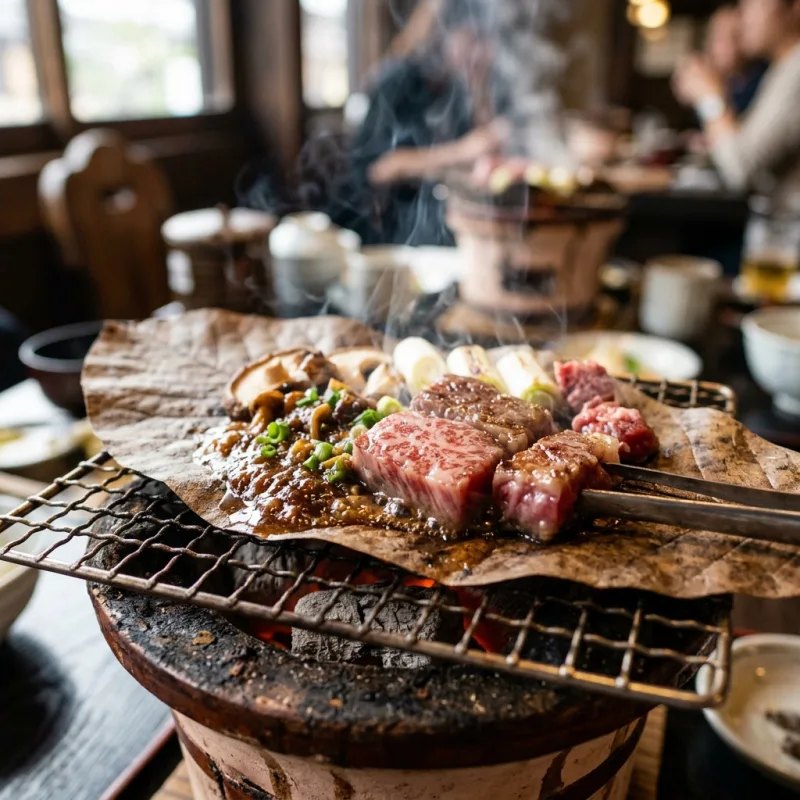
- Sensory Culinary Delights: Savor authentic Hida beef cooked over magnolia leaves with artisanal miso, skewered river trout, and hand-cut buckwheat soba.
- Panoramic Mountain Vistas: Ascend to the Shiroyama Viewpoint for an iconic elevated vantage point framing the entire village against alpine peaks.
Things to Avoid
- Do not smoke anywhere outside designated zones: The thatched roofs and historic wooden timbers represent extreme fire hazards; village rules ban open flames and smoking across the entire village.
- Do not trespass into residential gardens: Remember that many gassho-zukuri farmhouses are private family homes, not public exhibitions; keep strictly to public lanes.
- Do not expect trash cans: Japan operates a take-your-garbage-home policy; carry a small plastic bag in your daypack to pack out all personal trash.
- Do not arrive without transportation reservations: Express buses from Takayama and Kanazawa routinely sell out; arriving at regional hubs expecting walk-up seating often leads to stranding.
- Do not step backward onto road shoulders during winter: Rapid snow accumulation masks deep irrigation ditches; walking off the packed surface can cause severe falls into freezing water channels.
Local Transportation Tips
Shirakawa-go is a pedestrian-only paradise within the central historic district of Ogimachi, with the majority of notable houses, souvenir shops, and dining establishments located within a 15-to-20-minute walking radius of each other. The Shirakawa-go Bus Terminal serves as the gateway hub for regional expressway buses operated by Nohi Bus and Hokutetsu, connecting the village directly to Takayama (50 minutes), Kanazawa (85 minutes), and Nagoya (2.5 hours). To reach the elevated Shiroyama Observation Deck without a steep 15-to-20-minute uphill hike, a municipal shuttle bus departs every 20 minutes from the village center near the Wada House for a small cash fee of 200 JPY each way. Standard passenger vehicles are restricted from entering the inner residential lanes and must park in the designated Seseragi Park public parking area across the river, accessing the village via the scenic Deai-bashi pedestrian suspension bridge.
Travel Etiquette
- Remove shoes indoors: Always step out of your shoes upon crossing the threshold (genkan) of any farmhouse museum, ryokan, or temple, placing them neatly facing outward.
- Maintain whisper-level volume: The valley's natural acoustics amplify noise; avoid loud conversations, phone calls on speaker, or disruptive group behavior.
- Respect resident privacy: Never point cameras directly through windows of inhabited homes or photograph children walking to the local village school.
- Practice drone restrictions: Commercial and recreational drone flights are strictly prohibited village-wide to safeguard thatched homes and resident peace.
Recommended Age Group
Shirakawa-go is an accessible and educational destination suitable for varied travelers, though specific accessibility constraints apply to very young children and travelers with mobility challenges.
- Babies (0-2 years): Neutral. Cobblestone roads and narrow dirt tracks make stroller navigation difficult, while indoor historic homes require shoe removal and carry-only policies across steep ladder stairs. Baby carriers are necessary.
- Kids (3-12 years): Recommended. Children are enchanted by the storybook aesthetic, hands-on craft workshops, scenic outdoor suspension bridges, and open-air museum villages.
- Teens (13-19 years): Recommended. Photography enthusiasts and history lovers will appreciate the dramatic alpine vistas, anime cultural connections (the village inspired the setting for 'Higurashi When They Cry'), and unique architectural framing.
- Adults (20-64 years): Recommended. Highly rewarding for couples, cultural explorers, photographers, and culinary travelers seeking tranquility and historical immersion.
- Seniors (65+ years): Neutral. While the main village terrain is relatively flat, walking through deep winter snow or ascending the near-vertical wooden ladders inside the multi-story farmhouse museums poses safety and mobility challenges.
Accessibility Level: Medium
- Paved Village Arteries: The primary roadways running through Ogimachi are paved and mostly level, permitting basic manual wheelchair transit during snow-free months (May through October).
- Narrow Unpaved Pathways: Secondary paths between rice paddies consist of packed dirt, loose gravel, or turf, which can become muddy and uneven after rainfall.
- Steep Farmhouse Interiors: Historic farmhouses (Wada, Kanda, Nagase) are not barrier-free; entry requires stepping up onto raised tatami floors, and upper silkworm lofts are accessible solely via extremely steep, narrow wooden stairs resembling ladders.
- Accessible Restrooms: Modern wheelchair-accessible public restrooms are situated at the Shirakawa-go Bus Terminal, the Seseragi Park parking facility, and near the village tourist information office.
Did You Know?
The massive thatched roofs of Shirakawa-go's gassho-zukuri structures are assembled without a single iron nail. Instead, builders employ flexible wooden joints lashed securely with rope and tough, pliable wisteria vine cords (neso). When a roof requires re-thatching every 30 to 40 years, the entire village mobilizes under a cooperative communal labor system called 'yui'. Up to 200 neighbors assemble at dawn, working in unison to strip, repair, and completely re-thatch an entire multi-story farmhouse roof in a single day without paying wages, relying on reciprocal labor when their own roofs require future repair.
Cool Statistics
- 1995: The year Shirakawa-go and Gokayama were designated as a UNESCO World Heritage cultural site.
- Up to 60 Degrees: The steep pitch angle of the gassho roofs designed specifically to shed massive snow loads.
- 4 Meters: Average winter snowfall accumulation recorded in the Shogawa River basin, placing it among Japan's snowiest inhabited regions.
- 114: The total number of historic thatched gassho-zukuri buildings standing throughout the Ogimachi preservation district.






Buy a compatible power adapter for your trip