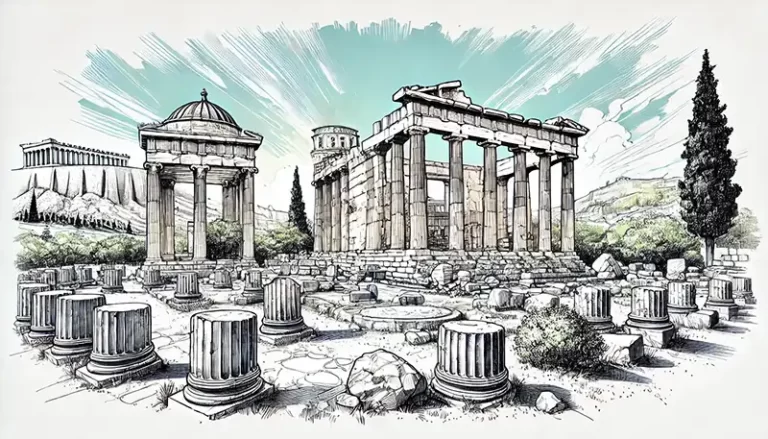
Athens is a city of striking contrasts, where ancient monuments stand proudly alongside modern apartment blocks and bustling cafes. The city's history spans over 3,400 years, making it one of the oldest continuously inhabited cities in the world. The crown jewel is undoubtedly the Acropolis, a rocky outcrop housing architectural masterpieces like the Parthenon, the Erechtheion, and the Temple of Athena Nike. Below the Acropolis lies the Ancient Agora, once the heart of public life where philosophers like Socrates and Plato walked.
Modern Athens is equally compelling. Neighborhoods like Plaka, with its neoclassical architecture and bougainvillea-draped streets, offer a romantic stroll through time. Meanwhile, areas like Psyrri and Gazi showcase the city's contemporary edge, filled with vibrant street art, trendy bars, and innovative restaurants. The city's cultural scene is thriving, anchored by institutions like the Acropolis Museum and the National Archaeological Museum, which house some of the most significant artifacts of Greek antiquity. Whether you are a history buff, a foodie, or an urban explorer, Athens promises an unforgettable journey.
Reasons to Visit
- Unparalleled historical sites, including the UNESCO World Heritage Acropolis.
- World-class museums showcasing ancient Greek artifacts and history.
- A vibrant and diverse culinary scene, from street food to fine dining.
- Lively nightlife with numerous rooftop bars offering stunning views of illuminated ruins.
- Proximity to the Athenian Riviera, offering beautiful beaches just a short tram ride away.
Things to Avoid
- Visiting the Acropolis during the midday heat in summer; go early morning or late afternoon instead.
- Eating at restaurants with aggressive touts outside, particularly around major tourist squares.
- Wearing high heels or slippery shoes when visiting archaeological sites; the ancient marble is notoriously slick.
- Carrying valuables in easily accessible pockets on the Metro.
Local Transportation Tips
Athens boasts a modern, clean, and efficient public transportation system. The Metro consists of three lines that connect major tourist sites, the airport, and the port of Piraeus. Buses and trolleybuses cover areas not serviced by the Metro, while the Tram connects the city center to the coastal suburbs of the Athenian Riviera. Tickets are integrated across all modes of transport and can be purchased at stations or via the official app. Taxis are plentiful and relatively inexpensive, but ensure the meter is running to avoid overcharging.
Travel Etiquette
- Dress modestly when visiting churches or monasteries (shoulders and knees should be covered).
- Greet shop owners and restaurant staff with a polite 'Yassas' upon entering.
- Do not touch artifacts or lean on ancient stones at archaeological sites.
- Patience is key; the local pace of life, especially dining, is relaxed and unhurried.
Recommended Age Group
Athens offers a diverse range of experiences suitable for various age groups, though the terrain requires some consideration.
- Babies (0-2 years): Neutral. While Greeks are very welcoming to infants, navigating ancient sites with a stroller is highly impractical due to uneven terrain and stairs. A baby carrier is essential.
- Kids (3-12 years): Recommended. Children are often fascinated by Greek mythology, and many museums offer interactive exhibits. Open spaces like the National Gardens are great for burning off energy.
- Teens (13-19 years): Recommended. The mix of ancient history, vibrant street art, and bustling markets keeps teenagers engaged. The food scene is also very accessible and appealing.
- Adults (20-64 years): Recommended. Adults will fully appreciate the rich history, diverse culinary offerings, and dynamic nightlife, including rooftop bars and cultural events.
- Seniors (65+ years): Recommended. The wealth of history and culture is highly appealing. However, those with mobility issues should plan carefully, as archaeological sites involve uneven ground and steep climbs.
Accessibility Level: Medium
- The Acropolis has an elevator for wheelchair users, but it requires advance notice and is subject to weather conditions.
- Major museums, such as the Acropolis Museum and the National Archaeological Museum, are fully wheelchair accessible.
- Many central areas like Plaka have cobblestone streets which can be challenging for mobility devices.
- The Metro system is generally very accessible, with elevators at most stations.
Did You Know?
Athens is named after Athena, the goddess of wisdom and warfare. According to mythology, Athena and Poseidon competed for the patronage of the city. Poseidon offered a spring of saltwater, while Athena offered an olive tree, symbolizing peace and prosperity. The citizens chose Athena's gift, and the city was named in her honor.
Cool Statistics
- Athens has been continuously inhabited for over 3,400 years.
- The city experiences more than 250 days of sunshine per year.
- The Athens Metro system doubles as a museum, with many stations displaying ancient artifacts uncovered during its construction.
- The Parthenon was built in just 9 years, between 447 and 438 BC.



























Buy a compatible power adapter for your trip